 EN
EN
 AR
AR
 BG
BG
 HR
HR
 CS
CS
 NL
NL
 FI
FI
 FR
FR
 DE
DE
 EL
EL
 IT
IT
 KO
KO
 NO
NO
 PL
PL
 PT
PT
 RO
RO
 RU
RU
 ES
ES
 SV
SV
 ID
ID
 LT
LT
 SR
SR
 UK
UK
 VI
VI
 HU
HU
 TH
TH
 TR
TR
 FA
FA
 MS
MS
 HY
HY
 AZ
AZ
 KA
KA
 BN
BN
 LO
LO
 LA
LA
 NE
NE
 MY
MY
 KK
KK
 KY
KY

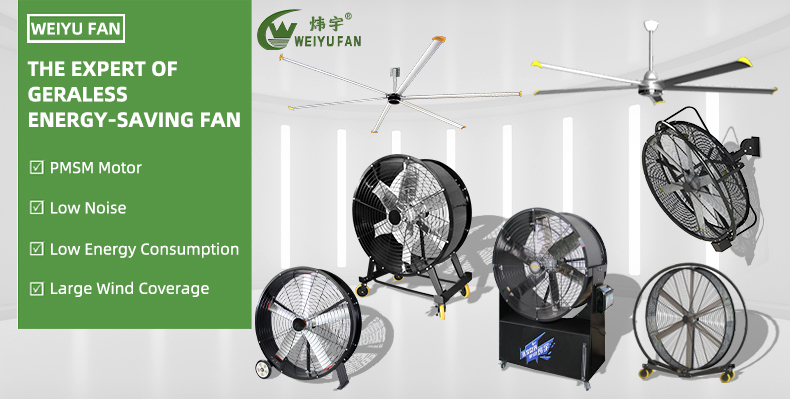
Solving Air Stratification with High-Volume Low-Speed Industrial Fans
The Challenge: Stagnant Air and Temperature Layering in High-Ceiling Facilities
In warehouses and distribution centers, warm air naturally rises while cooler air settles near the floor—a phenomenon known as temperature stratification. This creates stagnant thermal layers with differences exceeding 20°F between rafters and work zones. Without intervention, heat trapped at ceiling height wastes energy, while ground-level workers experience discomfort and reduced productivity. Research shows each 1°F above 77°F can lower output by 2%, compounding operational costs.
How Industrial Fans Enable Whole-Building Air Exchange and Thermal Equalization
High-Volume Low-Speed (HVLS) industrial fans resolve stratification by generating a vertical column of air that pushes warm ceiling air downward. Upon reaching the floor, this airflow spreads horizontally, mixing with cooler air before rising again in a continuous exchange cycle. This process:
- Reduces perceived temperatures by 6–8°F in summer
- Recaptures heated air in winter, lowering HVAC runtime
- Maintains consistent ±2°F differentials floor-to-ceiling
By eliminating thermal layers, HVLS systems cut heating and cooling expenses up to 30% while suppressing moisture buildup that leads to corrosion. Their gentle, uniform airflow—under 3 mph—circulates entire facilities quietly: a single 24-foot fan covers 20,000 sq ft, replacing 12+ traditional high-speed units.
Improving Indoor Air Quality and Preventing Moisture Damage
Controlling Humidity-Driven Risks: Condensation, Corrosion, and Mold
Stagnant air in logistics centers fosters humidity accumulation—triggering condensation on metal surfaces (accelerating equipment and structural corrosion), mold growth on stored goods (increasing contamination risk by 30% in still-air environments), and compromised packaging integrity. HVLS fans disrupt this cycle by maintaining consistent air movement across all vertical layers, reducing relative humidity below the 60% threshold where mold thrives. This continuous circulation prevents moisture stratification—especially critical in climate-controlled zones near loading docks, where temperature differentials frequently occur.
Evaporative Cooling and Dew Point Management Through Consistent Air Movement
Strategic air circulation from HVLS systems enables passive evaporative cooling by accelerating surface moisture evaporation—a process that lowers perceived temperatures by up to 7°F (3.9°C) without added energy consumption. By sustaining air velocities of 2–3 mph throughout the facility, these fans ensure dew point temperatures remain below surface temperatures, preventing condensation on palletized goods or machinery. This approach is especially effective in refrigerated storage transition zones, where rapid air exchange minimizes thermal shock to products while suppressing humidity spikes during door openings.
Boosting Worker Safety, Comfort, and Operational Productivity
Mitigating Heat Stress in Unconditioned Logistics Zones
Warehouses without climate control often exceed outdoor temperatures by 10–15°F—creating hazardous thermal conditions. HVLS fans combat heat stress through consistent air movement across work zones, accelerating sweat evaporation and lowering perceived temperatures by up to 10°F. This convective cooling reduces core body temperature during physically demanding tasks like loading and inventory management. Workers maintain focus longer with fewer heat-related distractions; decreased fatigue also lowers error rates in equipment operation. Proper airflow distribution further prevents microclimates where heat accumulates near machinery or storage racks.
OSHA Data: 28% Reduction in Heat-Related Incidents After Industrial Fan Installation (2020–2023)
OSHA’s analysis of 47 distribution centers revealed a 28% decline in heat exhaustion cases over three years following HVLS fan installation. Incident reductions were most pronounced in dock areas and packing zones—spaces historically prone to heat buildup—and correlated directly with improved air velocity (0.5–2 m/s) disrupting thermal stratification near workstations. Beyond safety, productivity rose 12% due to fewer breaks and sustained task efficiency. Continuous airflow also reduced humidity-related slip hazards near loading bays.
Delivering Energy Efficiency and Lower Total Cost of Ownership
HVLS industrial fans deliver substantial energy savings through intelligent airflow management—slashing cooling costs by up to 30% compared to traditional HVAC systems in logistics facilities. Their low-power design—often under 1 kW per unit—combined with optimized circulation reduces reliance on energy-intensive temperature control. Built for durability, they require minimal maintenance, and modular components enable swift repairs to avoid downtime. Facility managers consistently report ROI within 18–24 months through combined energy and maintenance savings. Continuous airflow also extends equipment lifespan by preventing moisture accumulation, further reducing capital replacement expenses.
FAQ
What is temperature stratification?
Temperature stratification is the layering of air within a space, where warmer air rises to the ceiling while cooler air sinks to the floor.
How do HVLS fans improve air circulation?
HVLS fans create a vertical column of moving air that redistributes warm air from the ceiling to mix with cooler ground-level air, promoting thermal equalization.
Can HVLS fans help with energy savings?
Yes, by reducing the need for HVAC systems to work harder, HVLS fans can lower heating and cooling expenses by up to 30%.
How do these fans impact indoor air quality?
By maintaining consistent air movement, HVLS fans reduce humidity and prevent condensation, which can lead to mold and corrosion.
Are there safety benefits to using HVLS fans?
Yes, consistent air circulation from HVLS fans can reduce heat-related incidents and improve overall worker comfort and safety.
 ONLINE