 EN
EN
 AR
AR
 BG
BG
 HR
HR
 CS
CS
 NL
NL
 FI
FI
 FR
FR
 DE
DE
 EL
EL
 IT
IT
 KO
KO
 NO
NO
 PL
PL
 PT
PT
 RO
RO
 RU
RU
 ES
ES
 SV
SV
 ID
ID
 LT
LT
 SR
SR
 UK
UK
 VI
VI
 HU
HU
 TH
TH
 TR
TR
 FA
FA
 MS
MS
 HY
HY
 AZ
AZ
 KA
KA
 BN
BN
 LO
LO
 LA
LA
 NE
NE
 MY
MY
 KK
KK
 KY
KY

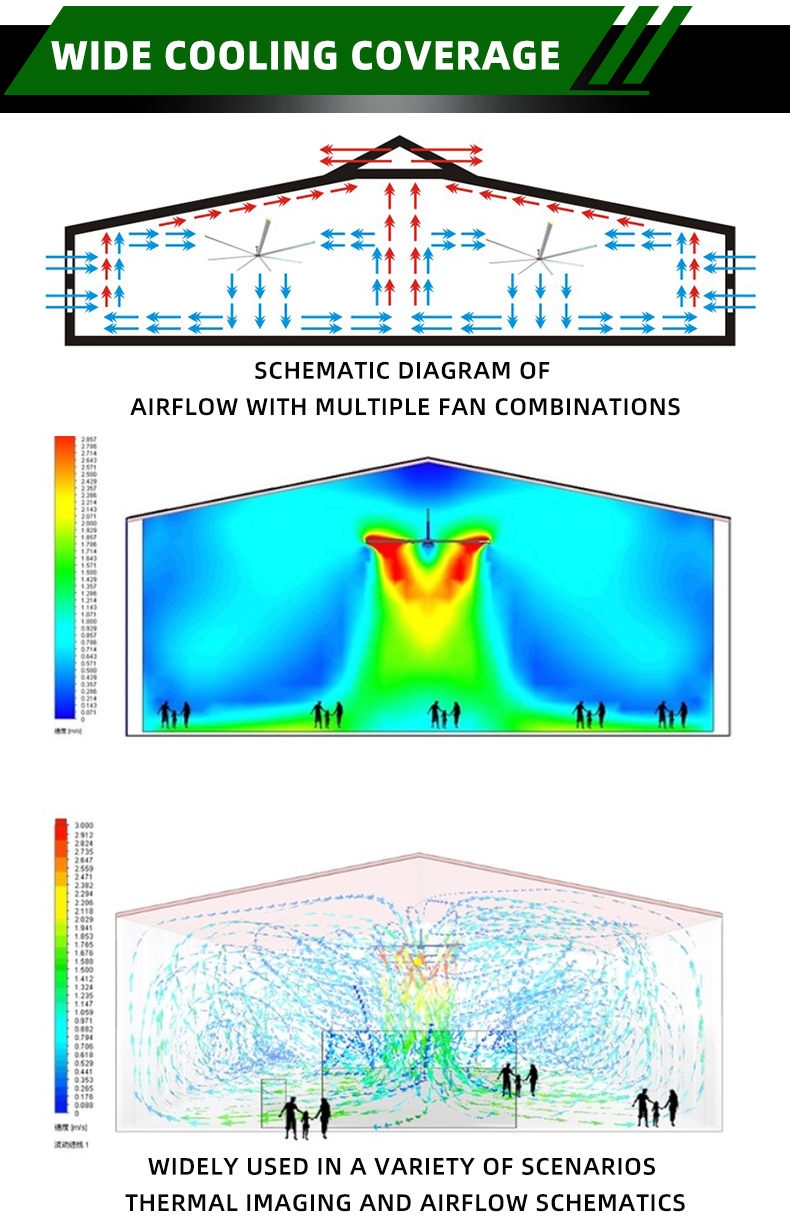
Measuring Air Circulation Efficiency of Industrial Ceiling Fans
Key Metrics: CFM, Coverage Radius, and De-stratification Depth
Evaluating industrial ceiling fan performance hinges on three critical measurements:
- CFM (Cubic Feet per Minute): Quantifies total air volume moved. High-efficiency models exceed 20 CFM per Watt—nearly triple the output of inefficient units, which fall below 8 CFM/Watt.
- Coverage Radius: Determines effective airflow diameter, typically 20–30 feet for industrial-grade fans—sufficient to serve large open bays without overlap or dead zones.
- De-stratification Depth: Measures vertical reach to disrupt thermal layers; in high-bay facilities (20+ ft ceilings), top-performing fans reliably mix air down to 8–12 feet from the floor, eliminating hot spots near the ceiling.
Standards Alignment: ASHRAE Guidelines and Fan Specification Best Practices
ASHRAE Standard 55-2023 specifies occupant comfort air speeds between 40–160 feet per minute—levels readily achieved by properly sized industrial ceiling fans. Optimal selection prioritizes:
- Energy efficiency (CFM/Watt ratios ≥15)
- Coverage area scaled to power draw—not just motor wattage, but delivered airflow per square foot
- Synchronization with HVAC de-stratification cycles to avoid redundant operation
When aligned with these principles, fans reduce cooling loads by up to 30% while maintaining uniform thermal distribution—validated through field studies cited in the ASHRAE Journal (2023).
Energy Savings and ROI of Industrial Ceiling Fan Installation
HVAC Load Reduction: Up to 30% Lower Cooling Demand
Industrial ceiling fans cut HVAC energy use year-round via intelligent air movement—not brute-force ventilation. In winter, they gently recirculate stratified warm air trapped at ceiling level, reducing heating demand by up to 30%. In summer, elevated air velocity enhances evaporative cooling, allowing occupants to feel 5–10°F cooler at the same thermostat setting—enabling meaningful setpoint adjustments that lower mechanical cooling loads proportionally.
| Seasonal Impact | Energy Reduction | Mechanism |
|---|---|---|
| Winter | ≤30% heating | Redistribution of ceiling-trapped heat |
| Summer | Proportional to airflow | Evaporative cooling effect enabling higher thermostat settings |
Fast Payback: ROI Achieved in Under 2 Years for Climate-Controlled Facilities
Industrial ceiling fans deliver a compelling financial return—typically achieving ROI in under 24 months in climate-controlled warehouses and manufacturing facilities. Energy savings alone often cover installation costs within 18–24 months. When factoring in ancillary benefits—such as reduced HVAC maintenance from lower runtime, 3–5% productivity gains linked to improved thermal comfort (Journal of Occupational Ergonomics, 2022), and prevention of moisture-related inventory damage—the payback period shortens further. This combination of rapid amortization and operational resilience makes ceiling fans one of the highest-impact, lowest-risk efficiency upgrades available today.
Frequently Asked Questions (FAQ)
What is CFM in the context of ceiling fans?
CFM stands for Cubic Feet per Minute and measures the volume of air a fan moves. High-efficiency ceiling fans should exceed 20 CFM per Watt.
What does coverage radius mean for industrial fans?
Coverage radius determines the effective area over which a fan can adequately maintain air movement, typically 20–30 feet for industrial fans.
How do industrial ceiling fans reduce HVAC load?
These fans optimize air circulation to lower energy demands. In winter, they redistribute warm air to decrease heating needs, while in summer, they increase air velocity to improve cooling.
What is the ROI timeline for installing industrial ceiling fans?
Typically, the return on investment for installing industrial ceiling fans in climate-controlled facilities is under 24 months, thanks to energy savings and additional benefits like reduced HVAC maintenance.
 ONLINE