 EN
EN
 AR
AR
 BG
BG
 HR
HR
 CS
CS
 NL
NL
 FI
FI
 FR
FR
 DE
DE
 EL
EL
 IT
IT
 KO
KO
 NO
NO
 PL
PL
 PT
PT
 RO
RO
 RU
RU
 ES
ES
 SV
SV
 ID
ID
 LT
LT
 SR
SR
 UK
UK
 VI
VI
 HU
HU
 TH
TH
 TR
TR
 FA
FA
 MS
MS
 HY
HY
 AZ
AZ
 KA
KA
 BN
BN
 LO
LO
 LA
LA
 NE
NE
 MY
MY
 KK
KK
 KY
KY

Core Industrial Fan Types and Their Manufacturing Applications
Axial, Centrifugal, Propeller, and Roof Ventilators: Matching Function to Process Needs
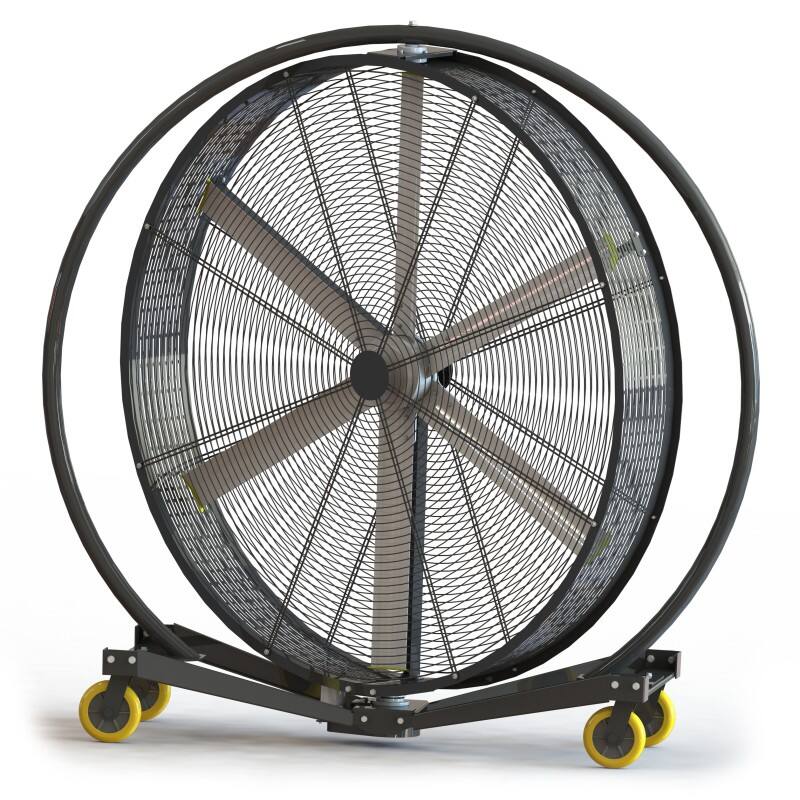
Choosing the right industrial fan starts with understanding how each type moves air—and where its strengths lie in real-world manufacturing settings. Axial fans move air parallel to the shaft, delivering high-volume, low-pressure airflow ideal for general ventilation, open-area cooling, and simple exhaust. Centrifugal fans draw air axially into the center and discharge it radially at a 90-degree angle—generating higher static pressure that makes them uniquely suited for ducted systems, filtration, and fume extraction where resistance is significant. Propeller fans are a cost-effective axial variant, typically wall- or window-mounted for localized cooling or spot ventilation. Roof ventilators—whether passive (wind- or buoyancy-driven) or powered—provide efficient top-down exhaust of heat, moisture, and process fumes from large facilities.
The functional distinction matters: chemical fume removal demands the pressure capability of centrifugal fans; warehouse-wide cooling aligns with axial or HVLS solutions; and thermal relief in high-bay spaces often combines roof ventilators with destratification fans. Selecting by application—not just airflow capacity—ensures optimal performance, energy efficiency, and long-term reliability.
HVLS, Overhead, and Wall-Mounted Fans for Thermal Management in Large Production Spaces
In large production facilities—especially those with ceiling heights above 15 feet—thermal stratification is a persistent challenge: warm air rises, leaving workers in cooler, denser air near the floor while equipment overheats overhead. HVLS (high-volume, low-speed) fans address this directly. By moving massive volumes of air slowly and evenly, they gently destratify heat, recirculating warmed air downward in winter and enhancing evaporative cooling in summer. Overhead fans—mounted on trusses, beams, or mezzanines—deliver targeted airflow to specific workstations, conveyors, or assembly lines, improving both personnel comfort and process consistency (e.g., paint drying or adhesive curing). Wall-mounted fans provide horizontal, directional flow ideal for drying surfaces, cooling operators, or sweeping airborne contaminants toward dedicated exhaust points.
All three types integrate seamlessly with building automation—thermostats, occupancy sensors, and CO₂ monitors can trigger staged operation—making them highly responsive, energy-smart supplements to central HVAC. When deployed strategically, they reduce heating and cooling loads by up to 30%, extending HVAC equipment life while maintaining ASHRAE-compliant thermal comfort across the occupied zone.
Critical Performance Metrics: CFM, Static Pressure, and System Compatibility
Calculating Required Airflow (CFM) from Heat Load, Occupancy, and Process Emissions
Accurately sizing industrial ventilation begins with calculating required airflow in Cubic Feet per Minute (CFM)—a value derived not from guesswork, but from quantifiable process inputs: machinery heat gain (BTU/hr), personnel load, and contaminant generation (e.g., welding fumes, grinding dust, or solvent vapors). The foundational formula for sensible heat removal is:
CFM = Total Heat Load (BTU/hr) ÷ (1.08 × ΔT)
where ΔT is the allowable temperature difference between supply and return air.
For hazardous emissions, OSHA’s permissible exposure limits (PELs) and ASHRAE Standard 62.1 dictate minimum air exchange rates—often 20–60 ACH (air changes per hour) depending on substance toxicity and process intensity. Underestimating CFM risks heat buildup, poor air quality, and noncompliance; overestimation inflates capital and energy costs. A 2023 ASHRAE study found that 68% of manufacturers miscalculated initial CFM, resulting in 19% higher retrofit expenses and suboptimal indoor environmental quality.
Why Static Pressure Determines Industrial Fan Suitability More Than CFM Alone
CFM tells you how much air a fan moves—but static pressure (SP) determines whether it can deliver that air through your system. SP measures the resistance imposed by ductwork, filters, dampers, and hoods. Ignoring SP is the most common cause of underperforming ventilation: a fan rated for 10,000 CFM at zero pressure may deliver less than half that volume when installed behind a HEPA filter or 100 feet of duct.
High-SP applications—including fume scrubbers, spray booth exhaust, and high-efficiency filtration—require centrifugal fans with robust impellers and motors capable of sustaining performance across resistance curves. Low-SP environments like open-bay cooling favor axial or propeller fans, where efficiency drops sharply if forced to overcome unnecessary backpressure.
| Factor | CFM Dependency | SP Dependency |
|---|---|---|
| Duct Length/Elbows | Low | High |
| Filter Load | Moderate | High |
| Heat Load Removal | High | Low |
| Energy Consumption | Direct | Exponential |
Always select fans using published performance curves—identifying the operating point where the system’s resistance curve intersects the fan’s CFM–SP curve. Facilities that prioritize SP compatibility over peak-CFM ratings cut energy use by an average of 23% (U.S. Department of Energy, 2022).
Robustness for Harsh Manufacturing Environments
Material Selection and Design Features for Corrosion, Fumes, High Heat, and Particulates
Industrial fans in manufacturing rarely operate in benign conditions. They endure chemical fumes, abrasive metal or wood dust, extreme ambient temperatures, and high-humidity corrosion—factors that rapidly degrade standard components. Material selection is therefore a frontline engineering decision, not an afterthought.
Stainless steel 316L offers superior resistance to chlorides and acidic vapors in chemical processing or plating lines. For high-humidity or coastal environments, powder-coated aluminum or epoxy-finished housings prevent oxidation better than standard painted steel. In particulate-heavy settings—such as foundries, woodworking, or food processing—sealed bearings, reinforced blade roots, and self-cleaning impeller geometries prevent clogging and imbalance-related vibration.
Heat resilience demands more than standard motor insulation: ceramic-coated housings, high-temp greases, and Class H insulation (rated to 180°C) maintain integrity near ovens, kilns, or heat-treating stations. Structural durability is further enhanced by anti-vibration mounts, IP54-rated enclosures (dust- and splash-resistant), and reinforced motor frames—features that collectively extend service life and reduce unscheduled downtime. These design choices don’t just improve longevity; they preserve consistent airflow performance over time, lowering five-year replacement costs by up to 40%.
Compliance, Safety, and Lifecycle Cost Considerations for Industrial Fan Deployment
OSHA, EPA, and ASHRAE Requirements for Industrial Exhaust and Ventilation Systems
Regulatory compliance is foundational—not optional—for industrial fan deployment. OSHA’s ventilation standards (29 CFR 1910.94, .134) mandate minimum airflow rates and hood capture velocities to control airborne hazards like silica dust, hexavalent chromium, and organic vapors. The EPA regulates VOC and PM10/PM2.5 emissions, often requiring exhaust systems with sufficient static pressure to drive air through carbon beds or wet scrubbers. ASHRAE Standard 62.1 defines acceptable indoor air quality (IAQ) thresholds, specifying minimum outdoor air quantities per person (e.g., 5–10 cfm/person) and per square foot (e.g., 0.06 cfm/ft²), depending on space classification.
Fans installed in classified hazardous locations—such as paint booths or grain-handling areas—must meet NFPA 70 (NEC) or ATEX requirements for explosion-proof construction. Third-party certifications—including AMCA 210 (air performance), AMCA 300 (sound), and ISO 5801—verify that published ratings reflect real-world operation and safety. Relying on uncertified equipment introduces liability, operational risk, and potential enforcement action.
Energy Efficiency Strategies: IE3 Motors, VFDs, and Total Cost of Ownership Analysis
Lifecycle cost—not just purchase price—drives smart fan investment. IE3 premium-efficiency motors reduce electrical consumption by up to 15% compared to legacy IE2 units, with even greater gains when paired with variable frequency drives (VFDs). VFDs enable precise speed modulation based on real-time demand—cutting fan energy use by 50% or more during partial-load operation, which accounts for >80% of typical runtime.
A rigorous total cost of ownership (TCO) analysis—factoring acquisition, installation, maintenance, energy, and expected service life over 10+ years—consistently shows that high-efficiency fans achieve payback within two years. For example, upgrading a 10-hp centrifugal exhaust fan from IE2 to IE3 + VFD reduces annual electricity costs by $1,200–$1,800, offsetting the premium in under 24 months. Routine maintenance—blade cleaning, belt tensioning, bearing lubrication—preserves efficiency and extends service intervals. When integrated with IAQ sensors and building management systems, intelligent controls further optimize runtime, ensuring fans run only when—and as much as—needed. This approach delivers measurable ROI while advancing sustainability targets and reducing carbon footprint.
FAQs
Why is static pressure important in industrial fan selection?
Static pressure measures the resistance imposed by system components like ductwork, filters, and dampers. High static pressure requires fans with robust motors and impellers, ensuring optimal airflow delivery even in demanding conditions.
How do HVLS fans improve thermal comfort in large spaces?
HVLS fans evenly destratify air, recirculating heated air downward in winter and enhancing evaporative cooling during summer, making them ideal for large production facilities.
What materials should industrial fans use in harsh environments?
Stainless steel 316L is ideal for chemical environments, while powder-coated aluminum or epoxy finishes work well in humid and coastal areas. Self-cleaning designs help in particulate-heavy environments like woodworking or foundries.
What are the benefits of IE3 motors and VFDs for industrial fans?
IE3 motors reduce energy use by up to 15%, while VFDs optimize fan speeds for real-time demand, cutting energy consumption during partial-load operation.
How can I ensure compliance with ventilation regulations?
Follow OSHA standards for airflow rates, EPA requirements for emissions control, and ASHRAE's IAQ thresholds. Using certified equipment ensures compliance, safety, and reliability.
Table of Contents
- Core Industrial Fan Types and Their Manufacturing Applications
- Critical Performance Metrics: CFM, Static Pressure, and System Compatibility
- Robustness for Harsh Manufacturing Environments
- Compliance, Safety, and Lifecycle Cost Considerations for Industrial Fan Deployment
-
FAQs
- Why is static pressure important in industrial fan selection?
- How do HVLS fans improve thermal comfort in large spaces?
- What materials should industrial fans use in harsh environments?
- What are the benefits of IE3 motors and VFDs for industrial fans?
- How can I ensure compliance with ventilation regulations?
 ONLINE