 EN
EN
 AR
AR
 BG
BG
 HR
HR
 CS
CS
 NL
NL
 FI
FI
 FR
FR
 DE
DE
 EL
EL
 IT
IT
 KO
KO
 NO
NO
 PL
PL
 PT
PT
 RO
RO
 RU
RU
 ES
ES
 SV
SV
 ID
ID
 LT
LT
 SR
SR
 UK
UK
 VI
VI
 HU
HU
 TH
TH
 TR
TR
 FA
FA
 MS
MS
 HY
HY
 AZ
AZ
 KA
KA
 BN
BN
 LO
LO
 LA
LA
 NE
NE
 MY
MY
 KK
KK
 KY
KY

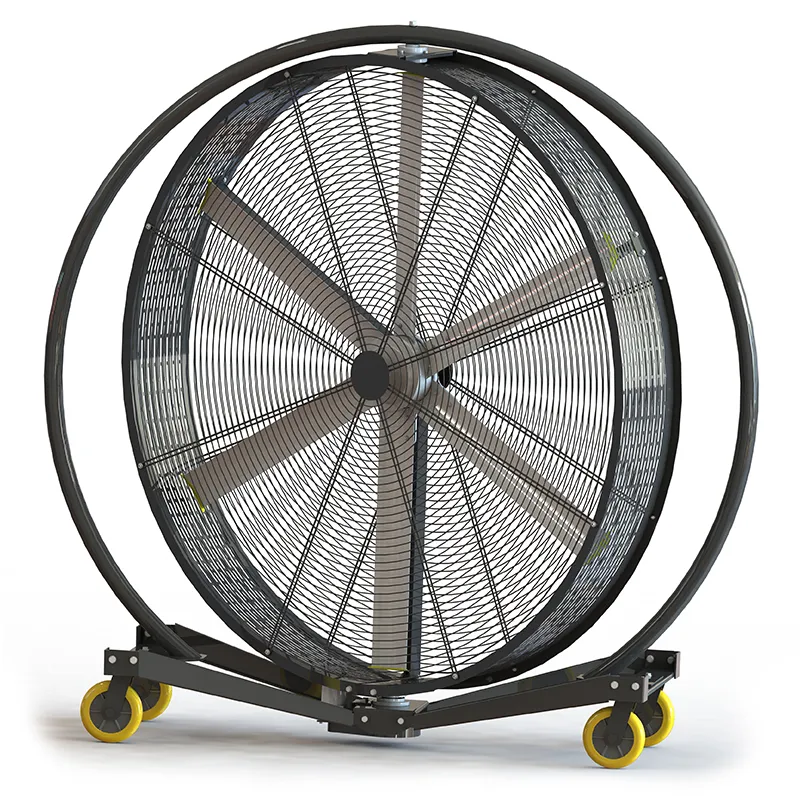
Understanding Thermal Stratification: Causes and Operational Costs
Thermal stratification escalates operational costs in warehouses due to natural air density imbalances—warm air rises, cool air sinks—creating persistent vertical temperature layers that force HVAC systems to overcompensate.
The Physics of Warm Air Rising in High-Ceiling Spaces
Thermal stratification happens because of basic convection principles. When air gets warm, it expands, becomes lighter, and floats up towards the ceiling. Meanwhile, the colder air stays down near the floor where people actually work. This becomes a big problem in warehouses where ceilings can be over 20 feet high. The warm air just stacks up there, creating these stable pockets that trap energy. All sorts of things contribute to this effect too. Warehouse lights, machines running all day, even sunlight coming through windows all add their own heat to the mix. If nobody does anything about it, workers end up uncomfortable down below while the heating and cooling systems struggle against nature itself. These systems have to keep working overtime, constantly trying to fix temperature differences instead of maintaining consistent conditions throughout the whole space.
Measurable Impacts: Up to 20°F Vertical Temperature Gradients and HVAC Overload
Measurements taken in factories regularly show big temperature differences from floor to ceiling sometimes over 20 degrees Fahrenheit. The warm air stays stuck up near the rafters while the floors get really chilly. This kind of temperature split makes workers uncomfortable and can actually be dangerous too, especially when it's cold outside. Plus, it pushes heating systems to work much harder than they should, sometimes making them consume around 30% more energy than normal. When HVAC units cycle on and off so frequently, they just wear out faster which means more frequent repairs and higher maintenance bills right when companies need to save money. Fortunately there's a better approach. Installing industrial fans helps mix up the air layers, breaking down these temperature pockets. These fans don't require massive investments or complete system replacements, yet they significantly cut down on HVAC dependency for most facilities.
How Industrial Fans Break Stratification Through Forced Convection
HVLS Airflow Mechanics: Creating Uniform Mixing from Floor to Ceiling
HVLS fans work against the natural layering effect in buildings by creating controlled airflow movement. These large fans generate a strong downward breeze even though their blades spin relatively slowly, around 70 to 120 revolutions per minute. The way they move air forms what engineers call a doughnut-shaped circulation pattern. Air comes down from the walls, spreads out across the floor area, then rises back up toward the center where it mixes with warmer air near the ceiling. In most warehouse setups, this whole cycle completes itself roughly every fifteen minutes or so. Research from ASHRAE indicates that cutting just one degree Fahrenheit off the temperature difference between floors can save about three percent on heating and cooling costs. What makes these fans so effective is how they balance things out without making people uncomfortable. Manufacturers carefully design the blade shapes and speeds so that when someone walks through the space, they feel a nice gentle movement rather than getting blasted by wind at face level.
Key Design Factors: Blade Profile, RPM, and Air Delivery at Working Height
Effective destratification relies on precision engineering—not just fan size. Aerodynamically tapered blades with an 8–12° pitch angle maximize laminar airflow volume while minimizing turbulence and noise. Performance hinges on three interdependent variables:
| Design Factor | Impact on Performance | Optimal Range |
|---|---|---|
| Blade profile | Determines air displacement efficiency and quiet operation | 8–12° pitch angle with tapered tips |
| RPM | Balances energy consumption against effective air throw and mixing depth | 70–120 RPM for 24' diameter units |
| Air delivery at height | Ensures meaningful mixing within occupied zones (2.5m / ~8 ft) | 1.5–2.5 m/s velocity at 2.5m height |
The placement rule is basically diameter plus half - meaning we space the fans about 1.5 times their blade size apart from each other. This helps create those overlapping coverage areas and gets rid of those annoying dead spots where no air seems to reach. Variable frequency drives or VFDs let us adjust the fan speed throughout different seasons as needed. And don't forget about those high torque motors which keep everything spinning smoothly even when there's actual wind resistance happening in real world conditions. Proper installation makes all the difference too. These systems can actually maintain pretty consistent temperatures throughout a building, usually staying within around +/- 1.5 degrees Fahrenheit according to field tests that meet ASHRAE standards. The best part? None of this requires tearing out or changing anything about the current HVAC setup already in place.
Proven Energy and Comfort Gains: Real-World Industrial Fan Performance
Distribution Center Case Study: 42% Heating Runtime Reduction
A warehouse with 30 foot high ceilings had been experiencing a regular 20 degree Fahrenheit difference between floor and ceiling temperatures before they installed those big HVLS fans. Once they put in twenty foot diameter HVLS units every forty feet apart, the heating system ran 42 percent less over three straight winters. The trick worked because these fans pulled the hot air that was getting stuck near the ceiling down to where people actually work. This kept the floors consistently around 68 degrees Fahrenheit throughout the building, saving over eighteen thousand dollars annually for each hundred thousand square feet of space. Best part? They didn't need any extra heaters, and nobody touched the thermostats during all this time.
Cold-Storage Adjacent Facility: Enhanced Worker Comfort Without HVAC Upgrades
A meat packing plant next to chilled processing areas had serious issues with cold air escaping through doors and creating uncomfortable spots around the loading area. After installing those big HVLS fans, the temperature differences on the factory floor dropped down to less than 5 degrees Fahrenheit, even when it was freezing outside. Employees noticed about 30% fewer complaints about being too cold or too hot, plus the humidity stayed below 60% most of the time. This kept surfaces dry enough to avoid slips from condensation and stopped metal parts from corroding. What made this work wasn't any fancy upgrades to the heating system, just constant air movement that mixed things up and got rid of those little pockets of extreme temperatures caused by exhaust fumes, constantly opening doors, and where warm and cold areas met.
Optimizing Industrial Fan Deployment for Year-Round Efficiency
Strategic placement and operation of industrial fans are essential to sustain destratification benefits across seasons. Proper sizing, spacing, and directional control transform fans from simple air movers into integrated climate management tools—delivering measurable energy, comfort, and reliability gains.
Sizing and Spacing Guidelines Based on Ceiling Height and Square Footage
- Ceiling height dictates fan diameter: Facilities under 24 feet typically require 8–12 foot HVLS fans; those with ceilings over 30 feet benefit most from 20+ foot units to reach and mobilize ceiling-stored air.
- Spacing follows the “diameter + overlap” rule: Position fans so their effective coverage circles overlap by 20–30%. For example, 24-foot fans spaced 40 feet apart ensure consistent, draft-free mixing at floor level.
- Square footage determines quantity: In open-plan warehouses, one 20-foot HVLS fan serves 20,000–25,000 ft². Layouts with racking, mezzanines, or production islands may require up to 30% additional units to maintain uniform coverage.
Seasonal Operation: Reversing Industrial Fan Direction for Winter Mixing vs. Summer Cooling
- Winter mode (clockwise rotation): Fans push warm air downward in a gentle column, reintegrating ceiling-stored heat into the occupied zone. This reduces heating runtime by up to 30% and eliminates cold pockets—particularly critical in high-bay spaces where radiant heat loss is pronounced.
- Summer mode (counter-clockwise): Fans induce upward airflow, enhancing evaporative cooling at occupant level while lifting hot, stagnant air away from workers. Air movement remains comfortable—below 2 mph—yet perceptibly improves thermal sensation, even without lowering thermostat settings.
- Transition protocol: Switch fan direction when outdoor temperatures consistently cross 60°F (spring) or 50°F (fall). Modern VFD-integrated systems automate this shift via thermostat or building management system (BMS) input—ensuring seamless, hands-off seasonal adaptation.
 ONLINE