 EN
EN
 AR
AR
 BG
BG
 HR
HR
 CS
CS
 NL
NL
 FI
FI
 FR
FR
 DE
DE
 EL
EL
 IT
IT
 KO
KO
 NO
NO
 PL
PL
 PT
PT
 RO
RO
 RU
RU
 ES
ES
 SV
SV
 ID
ID
 LT
LT
 SR
SR
 UK
UK
 VI
VI
 HU
HU
 TH
TH
 TR
TR
 FA
FA
 MS
MS
 HY
HY
 AZ
AZ
 KA
KA
 BN
BN
 LO
LO
 LA
LA
 NE
NE
 MY
MY
 KK
KK
 KY
KY

How Ceiling Fans Reduce HVAC Energy Demand in Manufacturing Facilities
Thermal destratification: Cutting heating energy use by redistributing warm air
Manufacturing facilities often experience a common issue where warm air rises to the ceiling while cooler air hangs around floor level. This creates what's basically a layer cake of temperatures throughout the building. The heating system then has to work extra hard just to keep people comfortable down below where they actually are. High volume low speed ceiling fans help fix this problem by creating a slow moving stream of air that brings some of that wasted heat back down from above. According to studies done by ASHRAE, facilities can cut their heating costs anywhere between 10 and 20 percent when these fans are properly installed. And for every single degree lower the thermostat can go because of better heat distribution, there's roughly another 1% saving on heating bills. These savings really add up over time especially during those long cold months when heating systems run constantly.
Cooling assist effect: Extending thermal comfort zones and lowering AC runtime
In the heat of summer, those big industrial ceiling fans work wonders for keeping people comfortable. They create that nice breeze effect on skin which feels like it drops temperatures around 3 to 5 degrees Fahrenheit. What happens next is pretty neat stuff for facility managers too. With this natural cooling going on, they can actually turn their thermostats up between 4 and 6 degrees without anyone complaining about being uncomfortable. The Department of Energy did some studies showing that every single degree higher on the thermostat saves somewhere between 3% to 5% in energy costs. And when companies place these fans strategically throughout their spaces, the results are even better. Summer cooling demands drop anywhere from 15% to 25%. No more annoying cold spots where nobody wants to be, no stagnant pockets of hot air either. Just steady, reliable temperature control across entire factory floors where workers need it most.
Ceiling Fan Efficiency Realities: HVLS vs. Conventional Fans and Verified Savings Data
HVLS ceiling fan performance metrics: Air movement, power draw, and coverage per watt
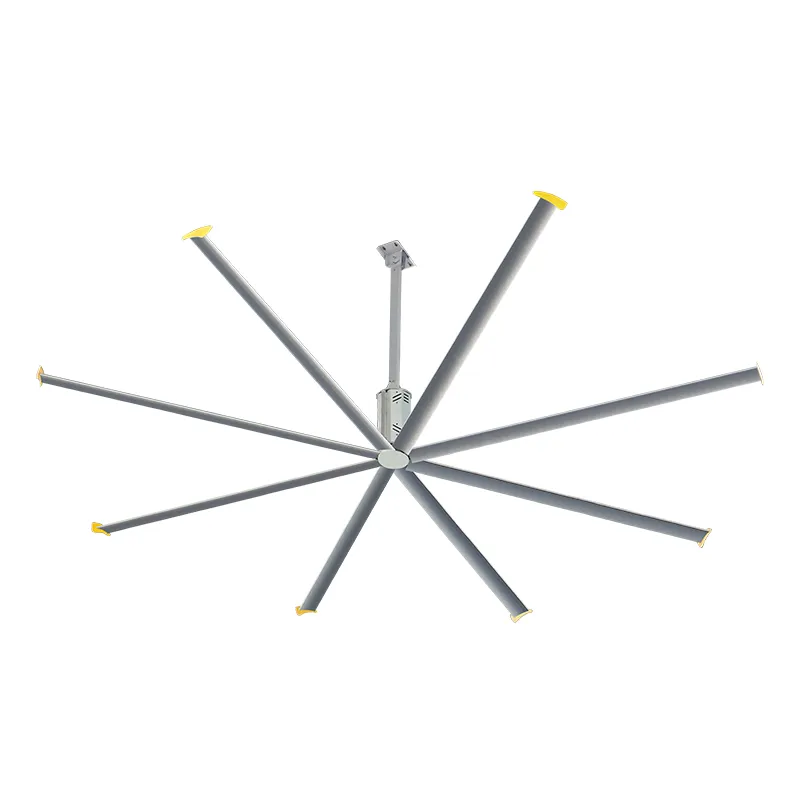
HVLS industrial fans are much more efficient thanks to their specially designed aerodynamics. Regular ceiling fans typically handle between 3,000 and 6,000 cubic feet per minute of airflow. But HVLS units can push up to 250,000 CFM with their specially shaped airfoil blades. And here's the kicker these big fans only need about 1 to 2 kilowatts of power to do all that work. What makes them really stand out is how much space they can cover. A single HVLS fan can reach 20 times more floor area than what it would take multiple smaller fans to achieve together. When we look at efficiency metrics, HVLS fans provide anywhere from 100 to 250 CFM per watt. Traditional models only manage around 40 to 80 CFM per watt. This makes HVLS fans ideal for spreading air evenly across large manufacturing facilities with high ceilings where consistent temperature control matters most.
ASHRAE and DOE field study benchmarks: What up to 30% actually means in practice
When people talk about those "up to 30% HVAC energy savings" numbers, they're really referring to best case scenarios from studies done by organizations like ASHRAE and the US Department of Energy. These kinds of savings aren't something every building will see though. For this kind of efficiency gain to happen, three things need to line up just right. First, the fans have to be sized correctly for the space they're in. Second, thermostats need to be set back between 4 and 6 degrees Fahrenheit during non-peak times. And third, the building needs to be located somewhere that experiences over 2,500 cooling hours each year. Take a look at a recent study from 2023 looking at warehouses across the Midwest. Researchers found an average saving of around 27% when high volume low speed (HVLS) fans allowed facilities to maintain summer temperatures at 78 degrees instead of the usual 72 degree standard. Of course actual results depend on lots of factors including how good the insulation is, who's using the space throughout the day, and even humidity levels. Still, most buildings can expect to achieve somewhere between 20 and 30% savings if everything is properly implemented and maintained.
Strategic Integration of Ceiling Fans with Building Systems
Getting the most out of energy savings means connecting ceiling fans properly with HVAC systems and building automation tech. When it gets cold outside, flipping those fans to spin backwards sends trapped warm air down from the ceiling where people actually need it. During hotter months, spinning them the normal way helps cool things off faster for occupants sitting under them. The real money saver comes when these fans work together with HVAC controls so they don't run at the same time and waste power. This matters a lot in older buildings still using outdated thermostats or ones where someone might manually override settings. Newer smart building systems take this even further by adjusting fan speeds automatically based on who's in a room and what the temperature readings show. Actual tests in factories have found that linking everything up this way cuts HVAC energy use between 18% and 27%, which is pretty impressive considering workers stay comfortable throughout huge production areas without feeling drafts or hot spots.
Real-World Impact: Energy and Productivity Gains from Ceiling Fan Deployment
Automotive manufacturing case: 27% HVAC energy reduction and measurable workflow improvements
A car manufacturing facility saw its HVAC costs drop by nearly 30% after putting in those big HVLS ceiling fans, which actually hit the numbers ASHRAE lists for similar industrial setups. These massive fans fixed the temperature layering problem throughout the year. In winter they pushed warm air down from the ceiling so less heating was needed, while during summer months they created comfortable work areas that cut down on air conditioning usage. The better climate control made a real difference for workers too. Line staff reported feeling less exhausted from heat exposure. Production speeds went up around 8% across the board, and fewer people called out sick. This shows that smart ventilation isn't just about saving money on utilities. When factories struggle with heat affecting output, these ceiling fans aren't just extra equipment anymore. They've become essential parts of keeping operations running smoothly and maintaining workforce health at the same time.
 ONLINE