 EN
EN
 AR
AR
 BG
BG
 HR
HR
 CS
CS
 NL
NL
 FI
FI
 FR
FR
 DE
DE
 EL
EL
 IT
IT
 KO
KO
 NO
NO
 PL
PL
 PT
PT
 RO
RO
 RU
RU
 ES
ES
 SV
SV
 ID
ID
 LT
LT
 SR
SR
 UK
UK
 VI
VI
 HU
HU
 TH
TH
 TR
TR
 FA
FA
 MS
MS
 HY
HY
 AZ
AZ
 KA
KA
 BN
BN
 LO
LO
 LA
LA
 NE
NE
 MY
MY
 KK
KK
 KY
KY

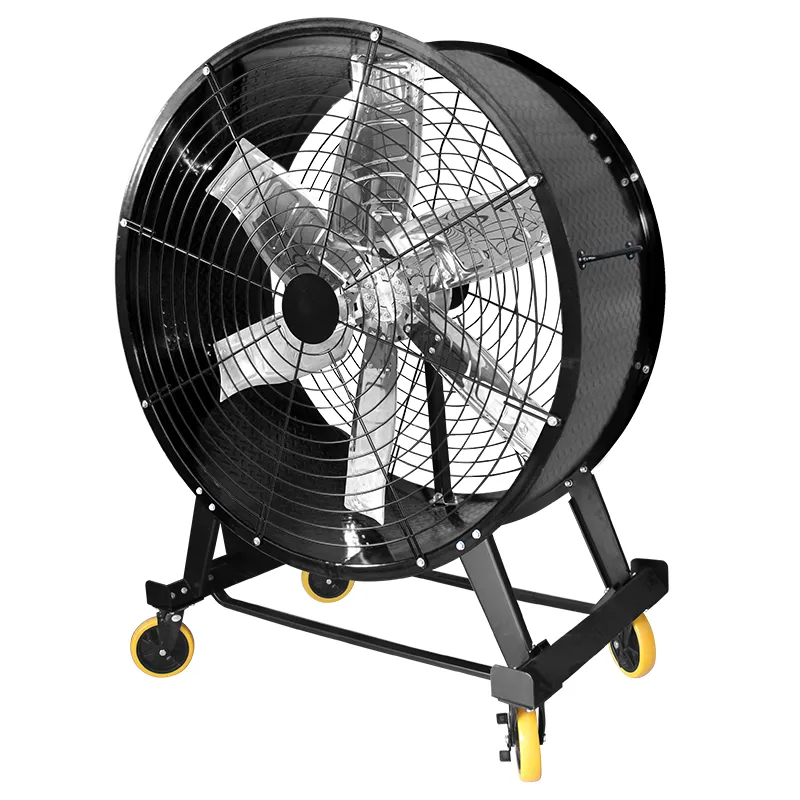
HVLS Big Fans Lower HVAC Loads Year-Round
Raising Thermostat Setpoints in Summer: Comfort Preservation via Air Movement
Big High Volume Low Speed (HVLS) fans let factories bump up thermostats around 4 to 6 degrees Fahrenheit in summer months without making workers uncomfortable. These massive ceiling fans move air at about 1 to 3 miles per hour across people's skin, creating a cooling effect similar to sweat evaporation but without those annoying draft sensations. The math works out pretty well too - for each degree warmer setting, cooling costs drop somewhere between 3% and 5%, translating into roughly 15% to 20% savings over the season according to what the US Department of Energy has found. Regular ceiling fans tend to blow air in specific areas, causing uneven temperatures throughout large industrial spaces. But HVLS units spread airflow evenly, getting rid of those pesky hot spots and temperature layers that form near ceilings. This means compressors don't have to work as hard all the time, so HVAC systems run smoother and save money in the long run.
Destratification in Winter: Recapturing Heat and Cutting Heating Energy Use
During winter months, large HVLS fans actually switch directions to mix up the air around a space, bringing down the warm air that gets stuck near the ceiling. Temperature differences between floors can get pretty big in factories sometimes, reaching anywhere from 30 to 50 degrees Fahrenheit. When we talk about destratification, what happens is basically recovering all that lost heat instead of letting it just hang out at the top. People stay comfortable even when the overall room temperature isn't as high, plus buildings save on heating costs somewhere between 10% and 30%. The savings come from needing less gas or electricity for heating, which also means no more those annoying situations where old heating systems work overtime just to warm up the ground floor while leaving the rest of the building chilly.
Energy-Efficient Big Fan Technology: Motors, Controls, and Sizing
ECM Motors and VFDs: Why Modern Big Fans Consume Up to 75% Less Power
HVLS fans today are getting much better at saving energy thanks to two key technologies: Electronically Commutated Motors (ECMs) and Variable Frequency Drives (VFDs). The ECM motor can actually change its speed based on what the building needs at any given moment, which means no more wasting electricity like those old fixed-speed AC motors did all day long. When it comes to VFDs, they work really well because of something called the fan law principle. For instance, if we slow down the fan rotation by just 20%, the power it consumes drops almost half. Put these together and manufacturers report cutting their energy bills by as much as three quarters when switching from older systems. Plus, ECM motors tend to stay cooler during operation and make less noise than traditional models. This not only makes them last longer but also reduces how often maintenance is needed. Factories that operate around the clock find this particularly beneficial since many report saving tens of thousands each year on their utility costs alone.
Optimal Big Fan Sizing and Spacing for Maximum Air Coverage per kW
Effective energy performance depends on precise fan sizing and layout—not just quantity. Undersized fans leave coverage gaps and force HVAC systems to compensate; oversized units waste energy through turbulent, inefficient airflow. Optimal spacing balances reach, overlap, and uniformity, guided by three key factors:
- Ceiling height, which determines ideal fan diameter and vertical airflow penetration
- Obstacle density, including racking, machinery, and structural columns that disrupt flow
- Target air velocity, ideally 2–3 mph at occupant level for thermal comfort
Computational fluid dynamics (CFD) modeling enables data-driven layouts—such as 20–30 foot spacing for 24-foot ceilings—that deliver 40% greater air coverage per kW than rule-of-thumb installations. This precision reduces unit count, eliminates redundancy, and maximizes energy ROI.
Proven ROI: Energy Savings and Operational Benefits in Real Manufacturing Settings
Case Evidence: kWh Reductions and Payback Periods (12–24 Months) Across Facility Types
Retrofitting high volume low speed fans tends to give pretty quick returns for businesses in various industrial settings. Most facilities see around a 20 to 30 percent drop in their HVAC electricity usage, and usually get their money back within about a year to two years. Take one auto plant somewhere in the middle of the country that managed to bump up their summer thermostat setting by just 4 degrees Fahrenheit thanks to better HVLS airflow management. That simple change saved them roughly 310 thousand kilowatt hours every year. Similar stories come from warehouses and metal foundries too, where some have reported cutting heating costs by as much as 25 percent during colder months when warm air naturally rises away from work areas. The US Department of Energy has looked into this stuff and basically confirmed what many facility managers already know: upgrading industrial fans typically pays off faster than most other improvements aimed at making buildings more efficient.
Beyond Energy: Heat Stress Reduction, Worker Productivity, and Reduced AC Dependency
There's actually a lot more going on here than just lower energy costs. Shops dealing with intense heat conditions, such as those found in metal fabrication facilities, see around 35% fewer cases of heat stress when they install HVLS fans correctly according to recent OSHA research. Workers tend to stay sharper throughout their shifts, make fewer mistakes caused by tiredness, and companies often notice productivity improvements between 5 to 8 percent. Cutting back on air conditioning usage during hot months means businesses save money on those expensive summer demand charges too, typically cutting them down somewhere between 15 and 20%. The HVAC equipment itself gets less wear and tear since it doesn't have to cycle on and off so frequently, which means longer lasting systems and fewer repair calls from maintenance crews. All these advantages stack up over time, delivering better bottom line results while keeping workers safer, supporting green initiatives, and building stronger operations overall.
 ONLINE