 EN
EN
 AR
AR
 BG
BG
 HR
HR
 CS
CS
 NL
NL
 FI
FI
 FR
FR
 DE
DE
 EL
EL
 IT
IT
 KO
KO
 NO
NO
 PL
PL
 PT
PT
 RO
RO
 RU
RU
 ES
ES
 SV
SV
 ID
ID
 LT
LT
 SR
SR
 UK
UK
 VI
VI
 HU
HU
 TH
TH
 TR
TR
 FA
FA
 MS
MS
 HY
HY
 AZ
AZ
 KA
KA
 BN
BN
 LO
LO
 LA
LA
 NE
NE
 MY
MY
 KK
KK
 KY
KY

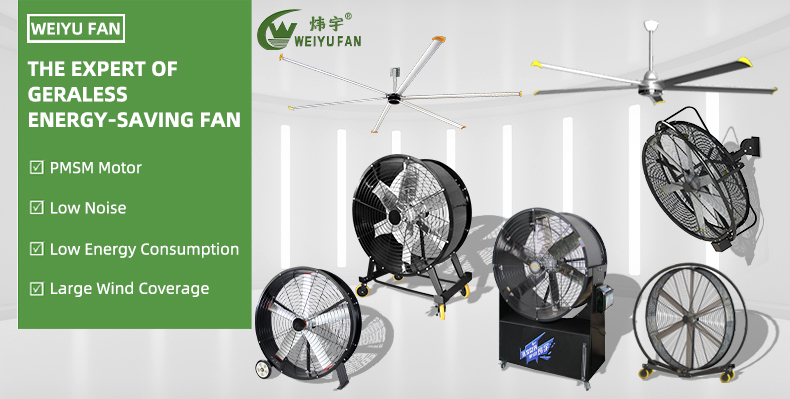
Airflow Performance: Matching CFM and Velocity to Small Workshop Demands
Calculating Minimum CFM Based on Workshop Volume and Air Changes per Hour
Determining the right cubic feet per minute (CFM) for your pedestal fan starts with workshop volume (length × width × height) and required air changes per hour (ACH). For example, a 30×20×10 ft workspace (6,000 cu ft) needing 6 ACH requires:(6,000 × 6) ÷ 60 = 600 CFM
This baseline ensures adequate ventilation to prevent heat buildup and airborne contaminant accumulation. Industrial environments with machinery or chemical processes should add a 20–30% buffer to account for airflow resistance from equipment and ducting—per ASHRAE Standard 62.1 and OSHA 1910.94 guidance.
Why Low-Profile Pedestal Fans Prioritize MPH Over CFM in Confined Areas
In workshops under 400 sq ft with dense equipment layouts, air velocity (MPH) trumps raw CFM. High-MPH pedestal fans deliver focused, high-pressure airflow that penetrates narrow aisles, creates localized cooling zones at workstations, and displaces stagnant air behind obstructions. A 12 mph stream reaching 15 ft away is more effective than diffuse 1,200 CFM airflow blocked by machinery. This directional precision makes low-profile units ideal for space-constrained workshops where coverage quality matters more than total volume moved.
Optimal CFM Range for Small Workshops (500–1,200 CFM) Under 500 sq ft — ASHRAE & OSHA Guidance
For sub-500 sq ft workshops, OSHA 1910.94 and ASHRAE Standard 62.1 recommend 4–8 air changes per hour—rising to 8–10 ACH in high-heat or high-emission tasks like welding or solvent use. Combined with typical ceiling heights, this yields a practical CFM range of 500–1,200 for most small industrial spaces:
| Workshop Area | Ceiling Height | Target ACH | Ideal Pedestal Fan CFM |
|---|---|---|---|
| ≤300 sq ft | 8–12 ft | 6–8 | 500–800 |
| 300–500 sq ft | 10–14 ft | 8–10 | 800–1,200 |
This range balances ventilation efficacy with energy efficiency—avoiding corner dead zones from undersized units or disruptive drafts from oversized ones. Verify performance using an anemometer near primary workstations to ensure consistent delivery.
Space-Smart Design: Portability, Footprint, and Layout Flexibility of Industrial Pedestal Fans
Base Diameter, Clearance, and Aisle Compatibility for <10-ft-Wide Workshop Zones
In workshops under 10 feet wide, spatial efficiency is critical. A pedestal fan’s base diameter should remain under 20 inches to avoid obstructing narrow aisles—especially important where OSHA mandates minimum 28-inch walkway clearance. Maintain at least 18 inches of unobstructed space around the unit to prevent tripping hazards while preserving airflow integrity. Compact designs with weighted, low-profile bases provide stability without sacrificing mobility, enabling safe repositioning between workstations. In cramped environments, oversized equipment can reduce usable floor area by up to 40%; intelligent footprint design preserves productive space.
Height Adjustment and 360° Swivel as Key Features for Targeted Air Delivery
- Vertical adaptability: Telescoping poles (36"–60") let you direct airflow precisely—cooling seated electronics benches or standing welding stations with equal effectiveness
- Horizontal coverage: Full 360° rotation eliminates dead zones, allowing one unit to serve multiple adjacent work cells
- Instant repositioning: Tool-free adjustment knobs enable on-the-fly redirection as tasks change—maintaining thermal comfort without interrupting workflow
This dual-axis adjustability transforms stationary pedestal fans into dynamic airflow tools—outperforming fixed-mount alternatives in layout-flexible small workshops.
Operational Practicality: Noise, Durability, and Ease of Use in Small Workshops
Acoustic Limits: Why <65 dB(A) Is Essential for Focus and Compliance
Sustained noise above 65 dB(A) impairs concentration, disrupts verbal communication, and risks hearing fatigue over extended shifts—making it a key compliance threshold under OSHA’s non-mandatory Recommended Practices for Safety and Health Programs. In confined workshops, reflective surfaces amplify reverberation; placing fans away from walls and ceilings further reduces perceived noise. Prioritizing models engineered for <65 dB(A) at 3 feet ensures both regulatory alignment and a tolerable environment for daily use.
Industrial Build Quality and Simple Controls for High-Use Workshop Environments
Workshop-grade pedestal fans demand rugged construction: all-metal housings, sealed ball bearings, and reinforced motor mounts withstand dust, vibration, and continuous operation. Unlike consumer-grade units, industrial models are built for 8–12 hours/day duty cycles without thermal degradation. Mechanical switches—not touchscreens or Bluetooth interfaces—offer glove-compatible, grime-resistant control. This intentional simplicity minimizes failure points, reduces maintenance frequency, and maximizes uptime in demanding small-shop settings.
Pedestal Fan vs. Alternatives: When a Pedestal Fan Is the Best Ventilation Choice for Small Workshops
Outperforming HVLS, Axial, and Exhaust Fans in Sub-400 sq ft Spaces
In workshops under 400 sq ft, pedestal fans deliver targeted cooling where alternatives fall short. HVLS fans require 10-ft+ ceilings and open floor plans—impractical in cramped, cluttered shops. Axial fans offer high CFM but lack mobility and rely on fixed wall mounting, limiting adaptability as workstations evolve. Exhaust fans remove contaminated air but provide zero active circulation or cooling effect across work zones. Pedestal models excel through three distinct advantages:
- Portability: Instantly redirect airflow to hotspots—no installation, wiring, or structural modification needed
- Precision control: 360° swivel and tilt targeting outperform whole-space systems in delivering air where it’s needed
- Space efficiency: Bases under 18 inches fit tight aisles where bulkier units would obstruct movement or workflow
| Feature | Pedestal Fan | HVLS | Axial | Exhaust |
|---|---|---|---|---|
| Workspace Fit | Optimal | Overpowered | Fixed reach | Air removal |
| Space Needed | ~2 sq ft | 100+ sq ft | Wall space | Roof/duct space |
| Layout Flexibility | High | None | Low | None |
No alternative matches the pedestal fan’s combination of directed airflow, compact footprint, and operational agility in confined workshops.
FAQ
What is the ideal CFM range for a small workshop?
For small workshops under 500 sq ft, an ideal CFM range is between 500 and 1,200, based on OSHA and ASHRAE guidelines for air changes per hour and typical ceiling heights.
Why is air velocity (MPH) more important than CFM in confined workshop areas?
In confined areas with dense equipment layouts, air velocity (MPH) is more effective as it delivers focused, high-pressure airflow that can penetrate narrow aisles and create localized cooling zones more effectively than diffuse CFM airflow.
How does a pedestal fan's design affect its suitability for small workshops?
The design of a pedestal fan, including a compact base diameter and height adjustability, ensures that it fits well in tight spaces without obstructing movement and provides targeted airflow.
Table of Contents
- Airflow Performance: Matching CFM and Velocity to Small Workshop Demands
- Space-Smart Design: Portability, Footprint, and Layout Flexibility of Industrial Pedestal Fans
- Operational Practicality: Noise, Durability, and Ease of Use in Small Workshops
- Pedestal Fan vs. Alternatives: When a Pedestal Fan Is the Best Ventilation Choice for Small Workshops
- FAQ
 ONLINE