 EN
EN
 AR
AR
 BG
BG
 HR
HR
 CS
CS
 NL
NL
 FI
FI
 FR
FR
 DE
DE
 EL
EL
 IT
IT
 KO
KO
 NO
NO
 PL
PL
 PT
PT
 RO
RO
 RU
RU
 ES
ES
 SV
SV
 ID
ID
 LT
LT
 SR
SR
 UK
UK
 VI
VI
 HU
HU
 TH
TH
 TR
TR
 FA
FA
 MS
MS
 HY
HY
 AZ
AZ
 KA
KA
 BN
BN
 LO
LO
 LA
LA
 NE
NE
 MY
MY
 KK
KK
 KY
KY

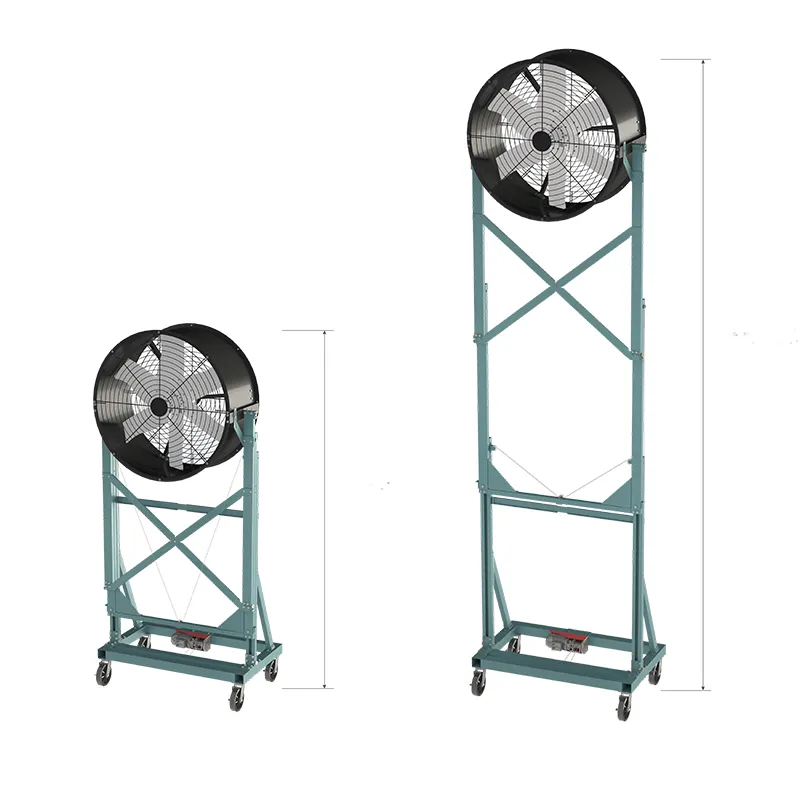
Pedestal Fan Use in Industrial Settings
Spot Cooling and Air Movement in Manufacturing Workstations
In manufacturing environments, heat buildup at individual workstations reduces worker comfort and productivity. A pedestal fan offers a direct, portable solution for spot cooling: operators can position it close to a work cell, tilt the head, and adjust the height to deliver targeted airflow—reducing perceived temperature without overcooling the entire facility. Unlike fixed overhead systems, pedestal fans remain flexible during production line reconfigurations. Their oscillation feature helps break up stagnant air pockets, while straightforward maintenance—such as removing the front guard to clean blades—ensures consistent performance. When used alongside existing ventilation, they enhance overall air movement. For example, a single 30-inch industrial-grade pedestal fan can move up to 10,000 cubic feet per minute (CFM) near welding stations or assembly lines, delivering rapid, localized relief. This adaptability makes them a cost-effective choice for factories where cooling needs shift by shift or season.
Fume Control and Thermal Regulation in Chemical, Food, and Metalworking Facilities
Pedestal fans also serve critical safety functions beyond comfort—particularly in chemical, food, and metalworking facilities. In chemical processing plants, they help disperse vapors away from workers during batch mixing or container filling. Food production lines use them to cool baked or fried products on conveyors, reducing spoilage risk. Metalworking shops deploy them to lower surface temperatures after welding or grinding, mitigating burn hazards. To operate safely in these demanding settings, fans must feature sealed TEFC motors and corrosion-resistant blades—especially where moisture, vapors, or acidic residues are present. Positioning a fan near furnace openings or drying ovens supports thermal regulation and helps maintain safe ambient temperatures. When paired with exhaust hoods, pedestal fans can reduce localized fume concentration by up to 60%, according to internal facility tests conducted under real operating conditions. Their mobility and variable speed controls allow teams to respond quickly to changing process demands—without costly infrastructure upgrades.
Pedestal Fan Deployment in Commercial Environments
Optimizing Air Distribution in Warehouses and Distribution Centers
Pedestal fans significantly improve airflow patterns in large commercial spaces like warehouses and distribution centers. Strategic placement minimizes stagnant zones and enhances worker comfort—contributing directly to operational efficiency. Research published in the Journal of Occupational Safety (2023) shows optimized ventilation can reduce heat-related productivity losses by 12–18%. Key deployment strategies include:
- Targeting high-traffic packing and sorting stations
- Creating cross-breezes between loading docks to flush out hot air
- Maintaining 30–50 air changes per hour (ACH) in refrigerated or perishable storage zones
These applications underscore how thoughtful fan placement supports both human performance and product integrity.
Adaptable Ventilation for Gyms, Commercial Kitchens, and Retail Backrooms
The portability and adjustability of pedestal fans make them ideal for dynamic commercial environments. In fitness facilities, directed airflow aids thermoregulation during high-intensity workouts. Restaurant kitchens rely on them for supplemental fume dispersion near grills and fryers—augmenting primary exhaust hoods without requiring ductwork. Adjustable height (typically 1.1–1.5 m) and oscillation enable rapid repositioning to match evolving spatial layouts, whether during peak service hours or seasonal inventory shifts. Because no permanent installation is needed, these fans offer immediate, scalable ventilation—ideal for spaces where flexibility and responsiveness are essential.
Key Selection Criteria for Industrial-Grade Pedestal Fans
Performance Metrics: CFM, ACH, and Real-World Cooling Validation
When selecting an industrial pedestal fan, prioritize two core metrics: CFM (cubic feet per minute) and ACH (air changes per hour). CFM reflects raw airflow capacity—critical for assessing cooling potential—while ACH indicates how frequently the fan replaces room air, with most industrial spaces requiring 6–10 ACH for effective ventilation. However, theoretical ratings don’t always translate to real-world performance. A fan rated at 15,000 CFM may deliver only half that at 20 feet if blade aerodynamics or motor efficiency are suboptimal. To avoid overestimation, validate performance using on-site airflow measurements or third-party lab reports—preferably those aligned with AMCA Standard 210. Verified data—not spec-sheet maximums—should drive selection decisions.
Safety, Durability, and Compliance: OSHA Guards, TEFC Motors, and Corrosion-Resistant Construction
Industrial pedestal fans must meet rigorous safety and durability standards. OSHA-compliant guards with finger-safe spacing (≤½ inch) prevent contact with rotating blades—a non-negotiable requirement for worker protection. In harsh environments—including chemical plants, food processing lines, and metalworking shops—TEFC (totally enclosed fan-cooled) motors protect internal components from dust, moisture, and corrosive agents. Corrosion-resistant construction—such as powder-coated steel frames or stainless steel hardware—ensures long-term reliability in humid, saline, or acidic conditions. Look for UL or ETL certification to confirm adherence to nationally recognized electrical safety standards. These features collectively reduce downtime, lower maintenance costs, and uphold compliance with OSHA’s general duty clause—making them foundational criteria for any industrial-grade pedestal fan purchase.
FAQ
What is a pedestal fan, and how does it work in an industrial setting?
A pedestal fan is a portable fan with an adjustable height and oscillating head. It provides targeted airflow, making it suitable for industrial settings to cool specific areas, disperse fumes, and regulate thermal conditions.
How does a pedestal fan enhance safety in chemical or metalworking facilities?
In these facilities, pedestal fans help disperse vapors, lower surface temperatures, and improve workplace safety. Features like TEFC motors and corrosion-resistant blades ensure the fan functions safely in demanding environments.
What metrics should I prioritize when choosing an industrial pedestal fan?
Key metrics include CFM for airflow capacity and ACH to measure room air exchange rates. Validating these metrics with real-world tests, like airflow measurements, is essential for accurate performance evaluation.
Are pedestal fans energy-efficient for large commercial spaces?
Yes, they provide targeted airflow, reducing the need for cooling the entire space, thereby enhancing energy efficiency while maintaining worker comfort and product integrity.
 ONLINE