 EN
EN
 AR
AR
 BG
BG
 HR
HR
 CS
CS
 NL
NL
 FI
FI
 FR
FR
 DE
DE
 EL
EL
 IT
IT
 KO
KO
 NO
NO
 PL
PL
 PT
PT
 RO
RO
 RU
RU
 ES
ES
 SV
SV
 ID
ID
 LT
LT
 SR
SR
 UK
UK
 VI
VI
 HU
HU
 TH
TH
 TR
TR
 FA
FA
 MS
MS
 HY
HY
 AZ
AZ
 KA
KA
 BN
BN
 LO
LO
 LA
LA
 NE
NE
 MY
MY
 KK
KK
 KY
KY

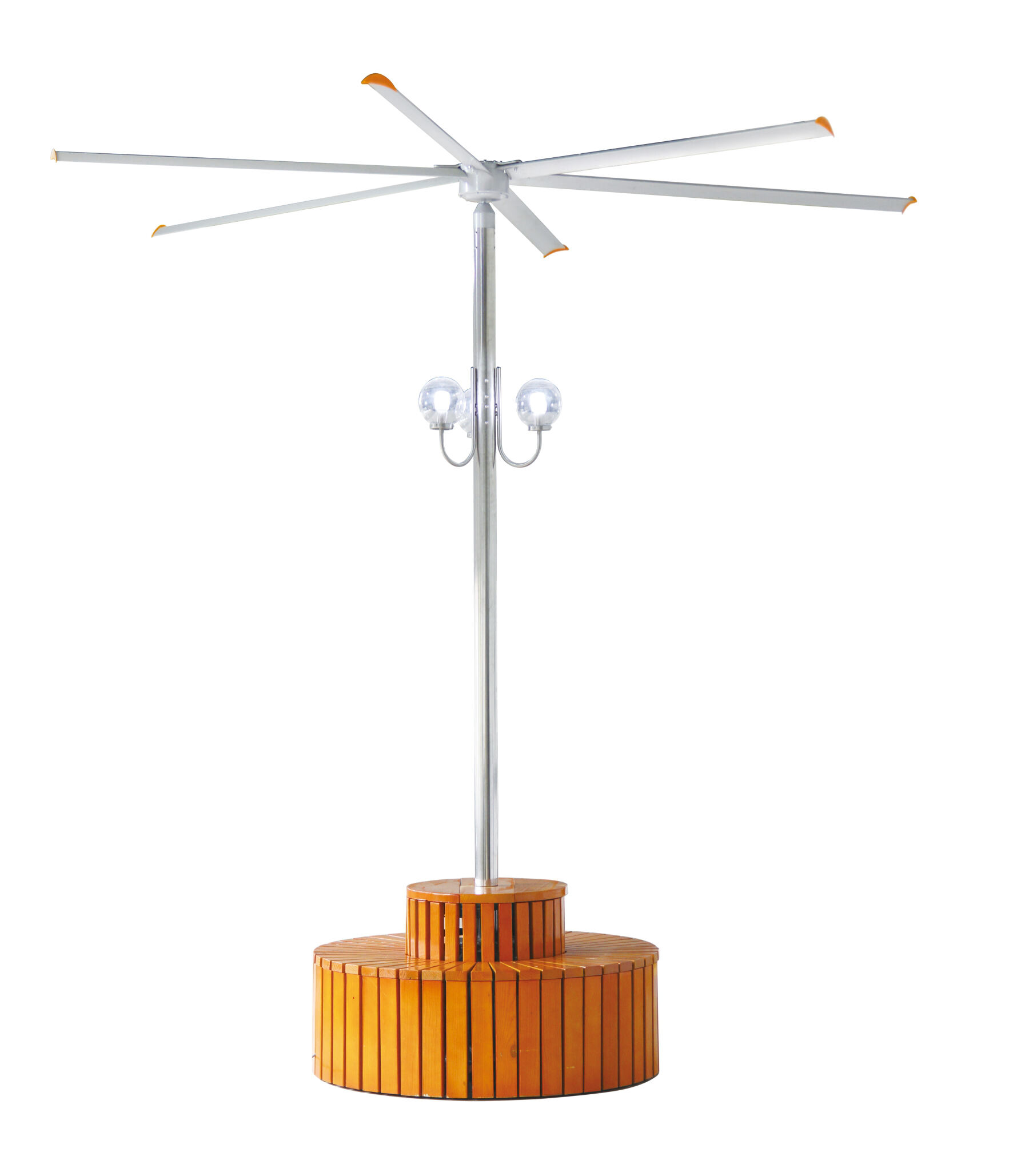
Superior Structural Stability and Load-Bearing Capacity
Withstanding Continuous Vibration and Dynamic Airflow in High-Duty Facilities
Metal stand fan poles deliver exceptional structural stability in demanding industrial environments characterized by intense vibration and turbulent airflow. High-velocity ventilation systems generate sustained kinetic forces that degrade lesser materials—often causing joint failure or misalignment within 12–18 months. Industrial-grade steel poles resist these forces through thick-walled construction and reinforced gusseting at critical stress points. Their integrated vibration-damping design maintains positional integrity in facilities like cement plants, forging lines, and material handling operations where ambient oscillation consistently exceeds 7–10 Hz. Crucially, they suppress resonance amplification—preventing harmonic vibrations from propagating through support structures when centrifugal fans operate near maximum RPM.
Precision-Engineered Mounting Options: Bolt-Down, Floor-Anchored, and Modular Integration
Robust mounting transforms stand fan poles from temporary fixtures into permanent, integrated assets. Bolt-down systems use seismic-grade anchor plates embedded directly into concrete floors—eliminating wobble and ensuring zero slippage during high-pressure washdowns. Floor-anchored variants adapt to uneven surfaces via adjustable base collars while preserving a stable 1:7 height-to-footprint ratio. Modular integration components feature standardized connectors compatible with conveyor frames, mezzanines, and existing ductwork—enabling fans to function as synergistic elements of broader mechanical systems. When paired with load-spreading collars, these solutions distribute mass across multiple structural axes, safely supporting heavier HVLS units or low-RPM axial fans without compromising safety margins.
Corrosion-Resistant Materials Built for Harsh Industrial Environments
Galvanized Steel vs. Stainless Steel 304/316: Performance Comparison in Humid and Chemically Aggressive Settings
Selecting the right material for a stand fan pole in corrosive environments directly impacts equipment lifespan and operational safety. Galvanized steel and stainless steel (grades 304 and 316) offer distinct performance profiles depending on exposure conditions:
| Material | Humidity Resistance | Chemical Resistance | Cost Efficiency | Typical Applications |
|---|---|---|---|---|
| Galvanized Steel | Good in moderate humidity; zinc coating provides rust protection | Limited—degrades under continuous acid, chloride, or alkali exposure | Low initial cost | Indoor factories, dry storage areas with minimal chemical exposure |
| Stainless Steel 304 | Excellent—resists oxidation in high-humidity environments | Good—handles most organic chemicals but vulnerable to chlorides (e.g., salt spray) | Moderate | Food processing, general industrial ventilation |
| Stainless Steel 316 | Superior—molybdenum content prevents pitting in moist or saline air | Excellent—resists chlorides, sulfuric acid, and many aggressive agents | Higher upfront cost | Marine facilities, chemical plants, offshore platforms |
For persistently humid or chemically aggressive settings—such as paper mills or electroplating shops—stainless steel 316 delivers the strongest long-term structural integrity. Galvanized steel remains viable in controlled, dry environments but requires frequent inspection where moisture is present.
Proven Longevity: Accelerated Testing Shows 5× Longer Service Life vs. Aluminum or Powder-Coated Mild Steel
Accelerated corrosion testing confirms that stainless steel 304 and 316 stand fan poles deliver up to five times longer service life than aluminum or powder-coated mild steel alternatives. Aluminum’s lightweight advantage is offset by galvanic corrosion risks when joined with dissimilar metals—and its protective oxide layer breaks down under constant chemical vapor exposure. Powder-coated mild steel, though initially protective, fails at cut edges or after minor impacts, exposing bare metal to rapid rust formation. Under ISO 9227 neutral salt spray testing, stainless steel 316 samples showed no red rust after 1,000 hours; powder-coated mild steel exhibited significant corrosion within 200 hours. For facilities prioritizing uptime and minimizing replacement cycles, the higher initial investment in stainless steel translates directly into decades of reliable, low-maintenance performance.
Optimized Fan Mounting and Mechanical Reliability Across Operational Cycles
Production machinery demands consistent thermal management—especially in continuous 24/7 operations. Optimized structural support for cooling systems isn’t optional; it’s mission-critical to preventing costly unscheduled downtime and production disruptions.
Thermal Expansion Compensation and Rigid Joint Design for 24/7 Production Shifts
Industrial-grade stand fan poles go beyond static support—they’re engineered to manage the dynamic interplay of thermal loads and mechanical stress. In factory environments with wide temperature swings, repeated metal expansion and contraction strain conventional mounts. Premium designs incorporate thermal compensation zones: precisely calculated expansion gaps and specialized alloy sleeves that absorb deformation forces without introducing failure points—unlike basic threaded connections lacking physics-based provisions.
Complementing this, joints use multi-point rigid locking mechanisms—such as four-bolt flange couplings or positive pin-locking systems—that deliver two key advantages:
- Shear Stress Dissipation: Axial fan motor imbalances generate force vectors that transfer radially into the stable pole structure—rather than degrading bearings or mount interfaces
- Wear Resistance: Tensile testing shows lock-joint designs retain ≥98% clamp force after simulated 10-year thermal cycling
The result? Setups capable of near-continuous operation demonstrate a 5.2× reduction in vibration-related axial fan motor repairs. Accelerated failure modeling projects over five times the lifespan of aluminum alternatives prone to fatigue cracking under cyclic stress—making reliability not just mechanical, but quantifiably financial.
Total Cost of Ownership Advantages of Industrial-Grade Stand Fan Pole
Choosing an industrial-grade stand fan pole—fabricated from galvanized or stainless steel—lowers total ownership expense across the equipment’s full lifecycle. Its resistance to corrosion and fatigue eliminates recurring replacements required by powder-coated or aluminum poles. Precision-engineered mounting points reduce installation time and simplify future repositioning, cutting labor costs. Facilities investing in such poles typically double maintenance intervals and significantly reduce unplanned downtime—factors that collectively lower three-year TCO by 30–45% compared to budget-grade supports.
FAQ
What are the benefits of industrial-grade stand fan poles in high-vibration environments?
The poles offer exceptional structural stability, vibration-damping properties, and reinforced construction to prevent joint failure or misalignment in dynamic settings.
Where are galvanized steel and stainless steel most suitable?
Galvanized steel is ideal for moderate humidity settings, while stainless steel (especially 316) excels in corrosive or highly humid environments such as marine or chemical plants.
Why is stainless steel 316 preferred over other materials in aggressive environments?
Stainless steel 316 resists pitting, chlorides, and chemicals, providing longevity and safety in extreme conditions—surpassing alternatives like aluminum or mild steel.
How do thermal compensation zones enhance pole performance?
These zones absorb deformation caused by temperature fluctuations, preventing strain and failure in high-temperature operational cycles.
What are the long-term cost benefits of using industrial-grade fan poles?
They reduce maintenance and replacement frequencies, extend operational lifespans, and lower total cost of ownership by 30–45% compared to budget-grade options.
Table of Contents
- Superior Structural Stability and Load-Bearing Capacity
- Corrosion-Resistant Materials Built for Harsh Industrial Environments
- Optimized Fan Mounting and Mechanical Reliability Across Operational Cycles
- Total Cost of Ownership Advantages of Industrial-Grade Stand Fan Pole
-
FAQ
- What are the benefits of industrial-grade stand fan poles in high-vibration environments?
- Where are galvanized steel and stainless steel most suitable?
- Why is stainless steel 316 preferred over other materials in aggressive environments?
- How do thermal compensation zones enhance pole performance?
- What are the long-term cost benefits of using industrial-grade fan poles?
 ONLINE