 EN
EN
 AR
AR
 BG
BG
 HR
HR
 CS
CS
 NL
NL
 FI
FI
 FR
FR
 DE
DE
 EL
EL
 IT
IT
 KO
KO
 NO
NO
 PL
PL
 PT
PT
 RO
RO
 RU
RU
 ES
ES
 SV
SV
 ID
ID
 LT
LT
 SR
SR
 UK
UK
 VI
VI
 HU
HU
 TH
TH
 TR
TR
 FA
FA
 MS
MS
 HY
HY
 AZ
AZ
 KA
KA
 BN
BN
 LO
LO
 LA
LA
 NE
NE
 MY
MY
 KK
KK
 KY
KY

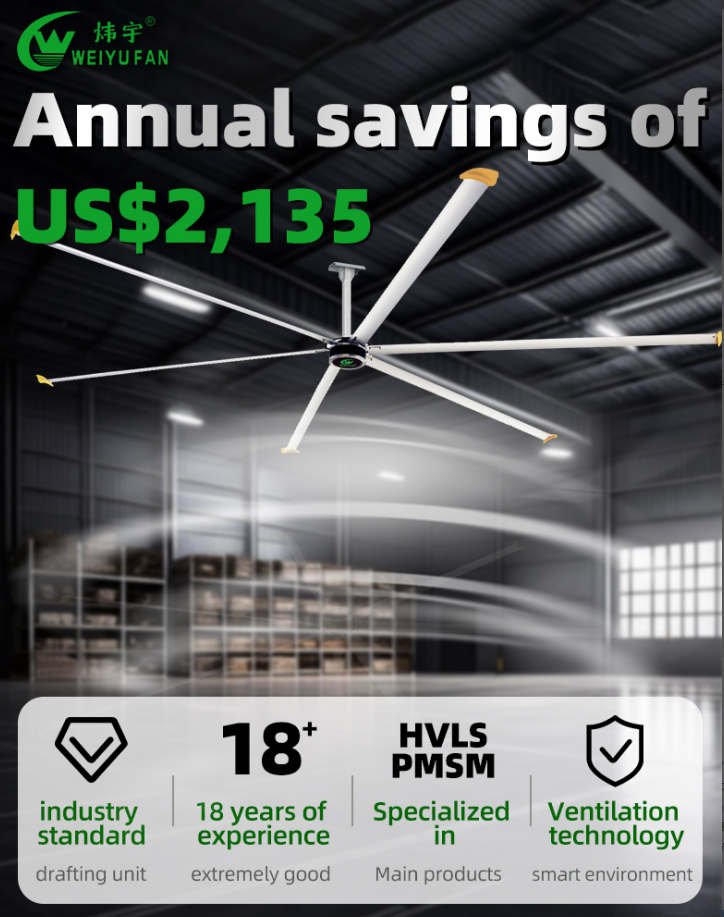
Core Energy Efficiency Metrics for Industrial Fans
CFM per Watt: The Standardized Benchmark for Industrial Fan Efficiency
The CFM per Watt measurement tells us exactly how much air movement we get from an industrial fan for every watt of electricity it consumes. This standard metric lets engineers compare different fan models fairly between brands too higher numbers mean better efficiency overall. Top tier fans equipped with EC motors and improved blade shapes regularly hit above 15 CFM/Watt mark, whereas older models tend to struggle below 4 CFM/Watt because of things like bearing wear, magnetic drag, and those old fashioned impeller designs nobody really likes anymore. Regulatory bodies have taken notice of this metric too. Standards like IECC-2021 and ENERGY STAR now require certain minimum levels for compliance, asking even basic exhaust fans to deliver at least 2.8 CFM/Watt before they qualify. Facility managers who focus on getting good CFM/Watt ratings when specifying new ventilation equipment usually see their power bills drop somewhere around 30 to 50 percent over time.
Motor Efficiency (IE3/IE4) vs. System Efficiency: Why Full-System Measurement Matters
The IE3 and IE4 motor ratings indicate pretty good electromagnetic conversion efficiency around 90 to 95 percent when tested in controlled laboratory environments. However, these ratings don't account for all the losses that happen in actual operation from things like bearings wearing down, drive systems losing power, coupling misalignments, housing friction, and air movement inefficiencies. Some field tests have actually shown something interesting about this topic. When looking at two fans equipped with exactly the same IE4 motors, their overall energy consumption can still vary quite significantly, sometimes differing by as much as 25%. Why? Because factors such as how the impeller is shaped, whether the blades are properly balanced, and if everything is aligned correctly during installation play major roles. What matters most is what we call system efficiency, which basically means taking the amount of air flowing out and dividing it by the total electricity going into the motor connections. For instance, an improperly aligned or unbalanced impeller will essentially waste away those impressive IE4 motor efficiencies because of vibrations and turbulent airflow patterns. That's why focusing on complete system optimization instead of simply swapping out motors tends to produce better results. Real world implementations often see energy savings between 18 and 22 percent when optimizing the entire system versus just replacing individual components.
Key Technologies That Reduce Industrial Fan Energy Consumption
EC Motors: Delivering 35–50% Lower Energy Use at Partial Load vs. Traditional Induction Motors
EC motors have become pretty much the go-to choice for industrial applications where loads vary throughout the day. Traditional induction motors just run at fixed speeds, while EC motors come with built-in smart electronics that constantly tweak their rotation speed based on what the system actually needs in terms of airflow. This means no more wasting energy through those old fashioned damper systems that throttle airflow inefficiently. The math behind it all works out thanks to something called the cube law relationship between power and speed, which lets these motors slash energy consumption by around 35 to 50 percent when running at less than full capacity, according to standards set by groups like AMCA. Another big plus is their permanent magnet rotor design that cuts down on electromagnetic losses, pushing overall efficiency up to nearly 92% compared to regular AC motors that typically max out around 80-85%. Plants that deal with changing production demands, think automotive manufacturing floors or meat packing facilities, really benefit from this kind of responsive airflow control without paying the price for running everything at maximum output all day long.
Advanced Aerodynamic Blade Design: Biomimetic Profiles and Low-Turbulence Geometry
Today's industrial fan blades get their design boost from something called computational fluid dynamics, or CFD for short. This helps keep air flowing smoothly instead of getting all turbulent when conditions change. Nature lovers might notice similarities between these fan blades and bird wings or ship propellers. The new designs have curved edges, smart shaping along the surface, and special features that manage airflow near the blade edge. All these tweaks cut down on drag compared to old flat blade designs, sometimes by as much as 30%. Static pressure gets better too, meaning fans can move the same amount of air while using 15 to 25% less power. What really makes a difference is how these blades stop those pesky vortices forming at the tips, which waste a ton of energy in most fans. Pair these blades with modern EC motors and manufacturers see real improvements: less wear and tear on equipment, quieter running fans, and significant savings on electricity bills over time in applications ranging from heating ventilation systems to food drying processes and material transport operations.
Variable Speed Control and the Cube Law: Maximizing Industrial Fan Energy Savings
How VFD Integration Enables Dynamic Load Matching and Avoids Throttling Losses
Variable Frequency Drives, or VFDs for short, can save a lot of energy because they let operators adjust fan speeds continuously and precisely. There's this thing called the cube law at work here too power consumption goes up with the cube of the fan speed. So when someone slows down a fan by about 20%, energy usage drops around half. Traditional methods like using inlet vanes or outlet dampers to control airflow are actually pretty wasteful. These older systems keep the motor running at full speed even when airflow needs drop, which means wasting up to 60% of the electricity as heat and noise during partial load operations. VFDs fix this problem by adjusting motor output based on what's actually needed right now, plus they tend to put less strain on components like bearings, shafts, and belts over time. Many plants that install VFDs on their existing fan systems see energy bills cut between 30% and 40%, sometimes getting their money back within just over a year or two. Given these benefits, incorporating VFD technology isn't something companies can afford to ignore anymore. It has become essential practice for anyone serious about designing or upgrading industrial fan systems responsibly.
Strategic Application: Thermal Destratification and HVAC Load Reduction with Industrial Fans
Big industrial fans can cut down on HVAC energy usage quite a bit by mixing up the air layers in buildings with high ceilings. Warm air naturally goes up while cold air stays near the ground, so many large spaces end up with temperature differences ranging anywhere from about 10 to maybe even 25 degrees Fahrenheit between where people walk around and the ceiling area. When this happens, heating systems have to work harder than necessary, which increases energy bills and makes workers uncomfortable. Putting in those big slow-moving fans or directional models helps mix the warm and cool air together throughout the space, making everyone feel better without needing as much heat input. The Carbon Trust did some research showing that getting this right can actually save between 20% and 30% on heating costs for places like warehouses, distribution centers, and factories. There are other perks too, like less moisture forming on roofs and metal parts, longer lasting HVAC equipment, and cutting back on carbon emissions. Getting good results really depends on customizing things properly though. It matters what kind of fan gets installed, how high it sits, whether it spins up or down depending on the season, and adjusting speeds according to when heating needs change throughout the year. Proper airflow management turns out to be one of those rare cases where saving money doesn't cost anything extra.
FAQ
What does CFM per Watt mean?
CFM per Watt is a measure of the air flow efficiency of a fan, indicating how much air movement (in cubic feet per minute) is produced per watt of electricity consumed. Higher CFM/Watt values represent better efficiency.
How do EC Motors differ from traditional induction motors?
EC motors use built-in electronics to adjust speed according to demand, making them more energy efficient than traditional induction motors that run at fixed speeds. They are known to reduce energy use by 35-50% at partial loads.
What are the benefits of using VFDs in fan systems?
VFDs allow precise fan speed control, reducing energy consumption according to the cube law. This results in significant energy savings, less mechanical stress on components, and can reduce energy expenses by 30-40%.
How do aerodynamic blade designs improve fan efficiency?
Advanced blade designs reduce drag and improve static pressure, leading to lower power consumption. They use biomimetic profiles and low-turbulence geometry to minimize energy-wasting vortices.
 ONLINE