 EN
EN
 AR
AR
 BG
BG
 HR
HR
 CS
CS
 NL
NL
 FI
FI
 FR
FR
 DE
DE
 EL
EL
 IT
IT
 KO
KO
 NO
NO
 PL
PL
 PT
PT
 RO
RO
 RU
RU
 ES
ES
 SV
SV
 ID
ID
 LT
LT
 SR
SR
 UK
UK
 VI
VI
 HU
HU
 TH
TH
 TR
TR
 FA
FA
 MS
MS
 HY
HY
 AZ
AZ
 KA
KA
 BN
BN
 LO
LO
 LA
LA
 NE
NE
 MY
MY
 KK
KK
 KY
KY

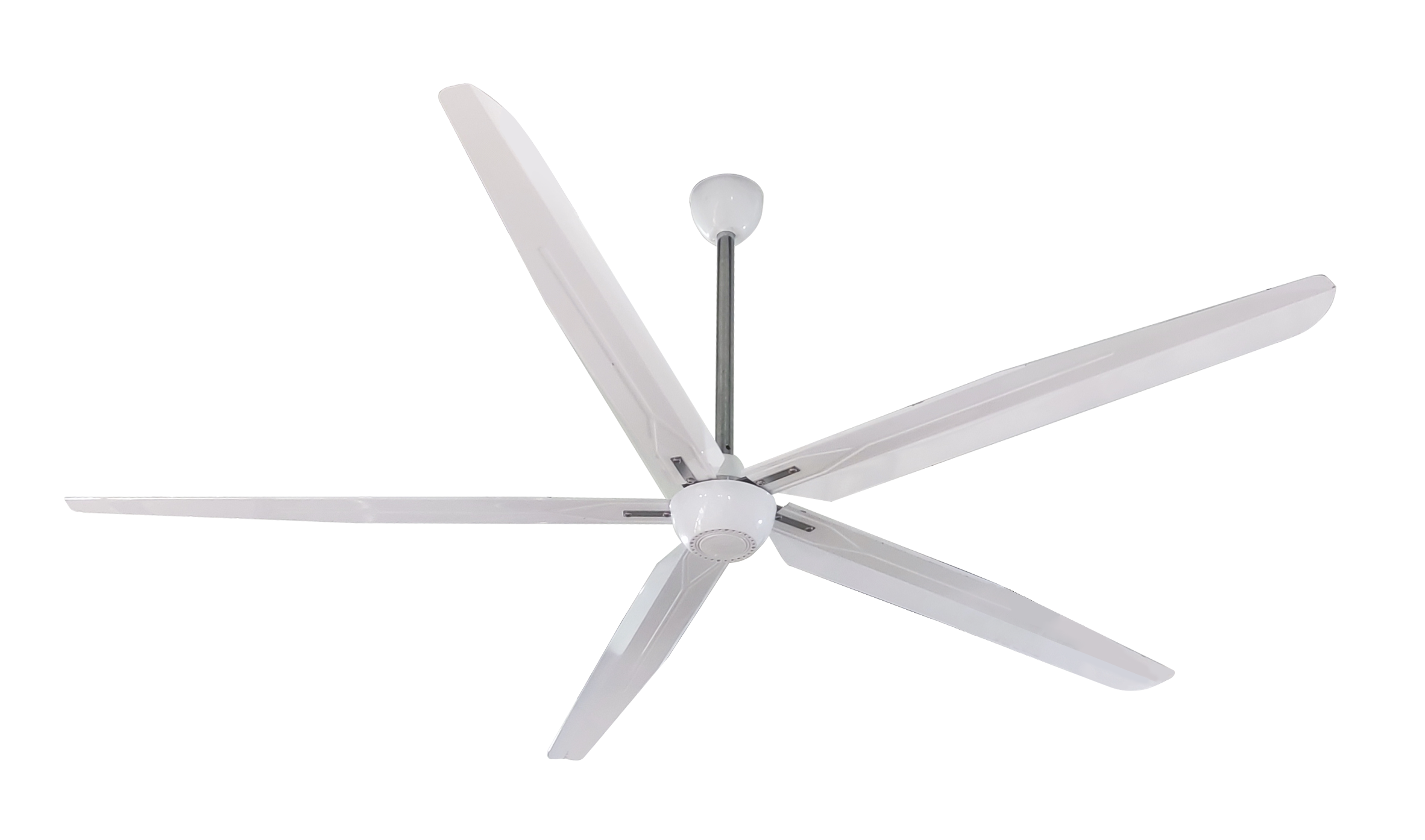
HVLS Fan Industrial Mounting Height: Code Compliance and Safety Foundations
NFPA 13 sprinkler clearance requirements for ceiling fan industrial HVLS
Proper clearance for an industrial HVLS ceiling fan must comply with NFPA 13 (2022) to ensure fire suppression remains fully effective. The standard mandates a minimum vertical separation of 36 inches between the fan’s blade plane and any sprinkler deflector—this prevents airflow from distorting or delaying the sprinkler’s spray pattern during activation. Installers must center each fan roughly between four sprinklers to avoid obstructing discharge coverage, and all rotating components—including blade tips, hub, and motor housing—must remain entirely outside the 36-inch clearance zone. An automatic shutdown interlock is required: the fan must stop immediately upon detection of water flow in the sprinkler system. Lateral placement must also keep the fan’s swept area clear of each sprinkler’s designated coverage zone. Because vibration, thermal expansion, or settling can reduce this gap over time, regular inspections are essential. Non-compliance risks voiding fire insurance coverage and delaying occupancy permits.
OSHA and IBC alignment for safe ceiling fan industrial HVLS installation
Mounting height must also satisfy occupational safety and structural integrity requirements under OSHA 29 CFR 1910 (2023) and the International Building Code (IBC 2021). OSHA requires that all fan components remain accessible for maintenance without exposing workers to fall or entanglement hazards—meaning service platforms or mobile lifts must safely reach the motor, drives, and blades, and an electrical disconnect must be located within sight of the unit. Per IBC 2021, the support structure must withstand at least three times the fan’s static weight, accounting for dynamic loads, rotational forces, and seismic activity where applicable. A structural engineer’s verification is mandatory before installation, especially in high-risk zones. Blade tips must remain at least 10 feet above the finished floor, a requirement enforced by OSHA for all rotating overhead equipment. All grounding, wiring, and circuit design must follow NEC standards—including a dedicated circuit for the variable-frequency drive. Together, these provisions form the foundation of a safe, legally compliant HVLS installation.
Optimizing Mounting Height Based on HVLS Fan Diameter and Blade Span
Minimum floor-to-blade-tip clearance (e.g., 10 ft) by fan size category
A 10-foot minimum clearance from floor to blade tip is the universal safety baseline for industrial HVLS fans—ensuring unimpeded personnel movement beneath the unit. In high-traffic warehouse aisles or production zones, operators often increase this to 12 feet for added margin. To achieve this, most installations require a ceiling height of at least 13 feet, allowing for a typical 2–3 foot mounting drop while preserving the required clearance. Below that threshold, large-diameter HVLS units cannot be safely accommodated.
Fan size categories align predictably with available ceiling height:
- Small HVLS (8–12 ft diameter): Suitable for ceilings 12–15 ft high
- Medium HVLS (14–16 ft diameter): Require ceilings of 15–18 ft
- Large HVLS (18–24 ft diameter): Need ceilings ≥20 ft
- Extra-large HVLS (24+ ft diameter): Demand ceilings of 25–30 ft to maintain safe blade elevation
Adhering to these guidelines prevents accidental contact and reflects widely adopted industry best practices.
Maximum recommended ceiling fan industrial HVLS diameter per mounting height
A proven engineering principle holds that the HVLS fan diameter should not exceed its blade mounting height—i.e., a fan suspended 14 feet above the floor should be no larger than 14 feet in diameter. This ratio balances aerodynamic efficiency, structural stability, and safe clearance. When diameter matches mounting height, airflow distributes evenly without blade tips nearing floor level or adjacent structures.
The table below maps blade mounting height to the largest recommended fan diameter, assuming a standard 2–3 foot suspension drop:
| Blade Mounting Height (ft) | Maximum Recommended Fan Diameter (ft) | Typical Ceiling Height Required (ft) |
|---|---|---|
| 10–12 | 10 | 12–15 |
| 12–15 | 12 | 15–18 |
| 15–18 | 16 | 18–21 |
| 18–22 | 18 | 21–25 |
| 22–26 | 24 | 25–30 |
Following this guidance ensures optimal air movement while maintaining the critical 10-foot floor-to-blade-tip clearance. In retrofit applications with borderline ceiling heights, selecting a fan one size smaller than the mounting height avoids interference and preserves long-term operational safety.
Verifying Critical Obstruction Clearances for Ceiling Fan Industrial HVLS
Final commissioning of an industrial HVLS ceiling fan hinges on rigorous field verification—not just design review—of all obstruction clearances. A single misjudgment can compromise fire suppression performance or create hazardous impact zones near mezzanines, catwalks, or mechanical systems.
Sprinkler head clearance: 3-ft minimum below blade plane per NFPA 13
As established in NFPA 13 (2022), the fan’s blade plane must sit at least 36 inches below sprinkler deflectors, ensuring airflow does not disrupt the intended water distribution pattern or delay activation. This vertical buffer must be maintained across the entire fan sweep—and verified after installation, not just during planning. The fan body should be centered approximately between four sprinkler heads to prevent localized cooling or airflow shielding of individual units. Critically, the automatic shutdown interlock must be tested and confirmed functional: fan operation must cease within seconds of water flow detection in the sprinkler piping.
Wall, structural beam, and MEP equipment clearance protocols
Lateral clearances safeguard both people and infrastructure. Blade tips must stay at least 3 feet away from any elevated work surface—including mezzanine railings, catwalks, or maintenance platforms—where personnel could reach or stand. For fixed structural elements like lighting fixtures, conduit runs, ductwork, or beams, a consistent 2-foot minimum clearance minimizes turbulence-induced vibration and eliminates risk of physical contact. To preserve HVAC performance and fan longevity, position the HVLS unit at least one full fan diameter away from supply diffusers, exhaust fans, or other air-handling equipment. This prevents destructive counter-currents that degrade air mixing efficiency and place unnecessary strain on the motor over time.
Frequently Asked Questions (FAQs)
What is the minimum clearance between HVLS fan blades and sprinkler deflectors?
The minimum clearance required is 36 inches, as per NFPA 13 (2022). This ensures effective fire suppression without interference from fan airflow.
How high should HVLS fan blades be installed above floor level?
Blades must remain at least 10 feet above the floor to comply with OSHA regulations and ensure unobstructed personnel movement.
Can HVLS fans be installed in seismic zones?
Yes, but the support structure must be engineered to withstand at least three times the fan’s static weight, including dynamic loads and seismic activity, as mandated by IBC 2021.
What is the relationship between HVLS fan diameter and mounting height?
The HVLS fan diameter should not exceed its blade mounting height, ensuring safe clearance and balanced airflow distribution.
What safety measures are required for electrical compliance?
The fan’s wiring and grounding must follow NEC standards, and a dedicated circuit for the variable-frequency drive should be installed.
Table of Contents
- HVLS Fan Industrial Mounting Height: Code Compliance and Safety Foundations
- Optimizing Mounting Height Based on HVLS Fan Diameter and Blade Span
- Verifying Critical Obstruction Clearances for Ceiling Fan Industrial HVLS
-
Frequently Asked Questions (FAQs)
- What is the minimum clearance between HVLS fan blades and sprinkler deflectors?
- How high should HVLS fan blades be installed above floor level?
- Can HVLS fans be installed in seismic zones?
- What is the relationship between HVLS fan diameter and mounting height?
- What safety measures are required for electrical compliance?
 ONLINE