 EN
EN
 AR
AR
 BG
BG
 HR
HR
 CS
CS
 NL
NL
 FI
FI
 FR
FR
 DE
DE
 EL
EL
 IT
IT
 KO
KO
 NO
NO
 PL
PL
 PT
PT
 RO
RO
 RU
RU
 ES
ES
 SV
SV
 ID
ID
 LT
LT
 SR
SR
 UK
UK
 VI
VI
 HU
HU
 TH
TH
 TR
TR
 FA
FA
 MS
MS
 HY
HY
 AZ
AZ
 KA
KA
 BN
BN
 LO
LO
 LA
LA
 NE
NE
 MY
MY
 KK
KK
 KY
KY

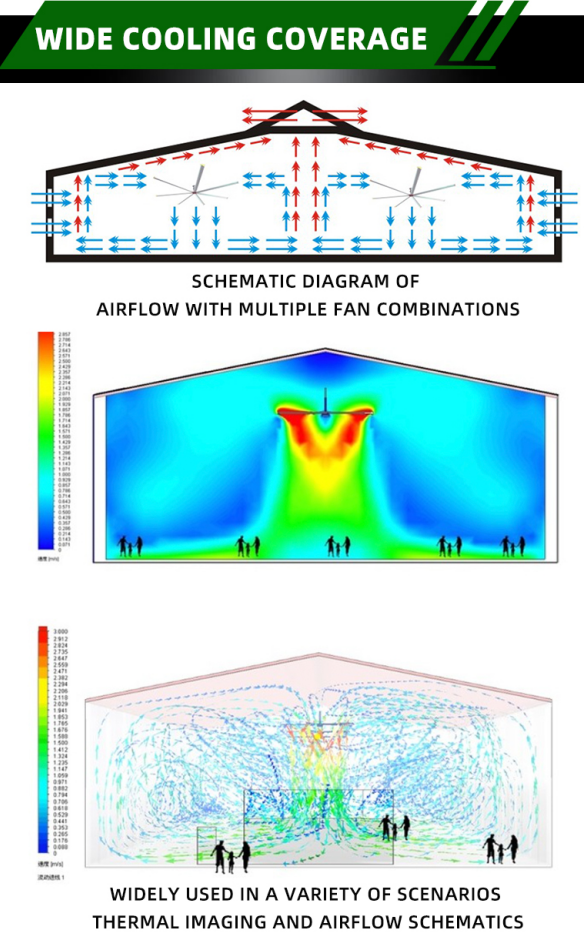
HVLS Fan Airflow Mechanics: How Large-Diameter Blades Create Effective Circulation
The Physics of Air Column Formation and Floor-Level Jet Development
HVLS fans work on principles of fluid movement to create a steady stream of air that moves straight down from ceiling to floor. These big fans have blades ranging between 7 and 24 feet wide, which means each spin pushes out an enormous amount of air. The result is a gentle jet of air that flows down along the walls rather than just blowing around randomly. What makes these fans special is how they actually mix things up in a room. They take the hot air hanging near the ceiling and blend it with the cooler air at ground level, getting rid of those uncomfortable temperature layers we often experience. The blades themselves are specially shaped with curves and tapered ends to cut down on annoying turbulence while still moving plenty of air efficiently. Compared to regular fast spinning fans that create all sorts of messy whirlwinds, HVLS units maintain smooth, even airflow throughout entire spaces.
| Feature | HVLS Fans | Traditional Fans |
|---|---|---|
| Blade Diameter | 7–24 ft | 1–4 ft |
| Airflow Pattern | Vertical column to floor | Localized turbulence |
| Energy Efficiency | 0.5–1.5 kW per fan | 5+ smaller fans required |
| Coverage Radius | Up to 22,000 sq ft | < 500 sq ft |
Debunking the Myth: Why HVLS Fans Move Significant Air–Not Just Redirect It
Many people think HVLS fans just push around what's already there. But actually, the special shape of their blades moves about 50 to 70 percent more air for each watt compared to regular fans. The science behind this is simple physics really. A standard 20 foot HVLS fan can move as much as 300 thousand cubic feet of air per minute even though it only spins at around 55 revolutions per minute. Tests using smoke have shown something interesting too. These fans bring in fresh air from outside into buildings where they're installed, sometimes increasing airflow by as much as forty percent because of the way they create drafts. And this real movement of air isn't just moving stuff around passively. It actually helps cool things down through evaporation, making the space feel about ten degrees cooler than it actually is.
Energy Savings and Destratification: Quantifying HVLS Fan HVAC Synergy
ASHRAE-Validated Load Reduction: Up to 30% Energy Savings in High-Bay Spaces
HVLS fans cut down on HVAC energy consumption by mixing up warm and cool air throughout buildings. When working in spaces with high ceilings, we all know what happens: hot air climbs up there, leaving a big gap between what's at the ceiling versus what people actually experience on the ground floor. Sometimes this difference hits around 10 to 15 degrees Fahrenheit. That means heating systems have to work harder than necessary, which wastes money and resources. These large diameter fans create gentle airflow that blends those separate layers together so everyone stays comfortable at similar temperatures. According to studies from ASHRAE, facilities like warehouses and factories can see their heating requirements drop by as much as 30 percent when these fans are properly installed. Facility managers find they can adjust thermostats more freely without making occupants uncomfortable, which saves cash month after month and helps keep HVAC equipment running longer since it doesn't need to run constantly.
Year-Round Performance: Cooling Efficiency in Summer, Warm-Air Recirculation in Winter
HVLS fans offer value throughout different seasons because of how they adapt their operation. During warm months, these fans help with evaporative cooling on people's skin, which means thermostats can be set a few degrees higher (around 3 to 5°F). This small adjustment translates into about 3% less energy needed for cooling each degree raised. When winter comes around, simply flipping the blades so they spin clockwise sends warm air from ceilings back down where it belongs, without creating uncomfortable drafts. This process recovers heat that would normally need an extra 20 to 30% in energy costs to generate again. A single fan does double duty then, providing natural cooling during summers while redistributing warmth effectively in winters. The result? More even temperatures throughout spaces all year long, no more annoying hot or cold areas, and HVAC systems running significantly less time overall, sometimes cutting usage by as much as a quarter.
Optimal HVLS Fan Sizing, Spacing, and Mounting for Maximum Airflow Coverage
Ceiling Height–Driven Diameter Selection (e.g., 24-ft Ceilings – 24-ft HVLS Fan)
When it comes to high volume low speed (HVLS) fans, getting the right size matters a lot for both how well they work and keeping things safe. Most experts suggest that the fan blades should match the ceiling height pretty much one to one. Think about this: if the ceiling is 24 feet high, then a 24 foot fan makes sense, but leave at least 25% space between the top of the fan and the ceiling itself. Put too small a fan in a big room? The air won't reach down to where people actually are. Go too big and there might be problems with parts hitting each other or just not moving air properly across the whole area. Bigger fans do cover more ground though. Some research shows these big fans can move air over an area about five times bigger than their own width. That's why they're so popular in those huge warehouses that measure around 20 thousand square feet or more.
Strategic Placement Guidelines: Avoiding Dead Zones and Ensuring Overlap-Free Coverage
Getting the placement right makes all the difference when it comes to getting rid of those annoying stagnant spots and avoiding messy airflow clashes. Generally speaking, fans should be spaced somewhere between 60 to 120 feet apart depending on their size, making sure there's not too much overlap in their coverage area – ideally keeping it below 10%. Don't put them right over heavy stuff like shelves or big machines either. Focus more on where people actually hang out and move around a lot. Leave at least two feet between the fans and walls, lights, or anything else sticking out so we don't create unnecessary turbulence. When dealing with weird room shapes, using something called computational fluid dynamics modeling can help spot those problem areas nobody sees coming. This approach helps get air moving evenly throughout the space and studies show it can cut down HVAC workload by as much as 30% in large industrial spaces.
Proven HVLS Fan Applications Across Commercial and Industrial Environments
Warehouses & Manufacturing: OSHA-Compliant Heat Stress Mitigation and Productivity Gains
Large ceiling fans in warehouses and manufacturing spaces help keep workplaces safe from heat stress issues that concern OSHA regulations. These fans move air throughout entire floors consistently, creating better working conditions. When people sweat, the moving air helps cool them down, making it feel like the temperature drops between 5 to 7 degrees Fahrenheit. Safety records show this can cut heat-related accidents by around 30%. Employees who work in places with good airflow tend to be about 12 to 15% more productive simply because they don't get as tired from the heat. Plus, these fans create smooth air movement that stops dangerous pockets of stagnant air where dust and fumes might build up. This not only keeps the air quality within regulatory standards but also saves money on energy bills since the building's heating and cooling systems don't have to work as hard.
Gyms, Aircraft Hangars, and Churches: Adapting HVLS Fan Airflow to Unique Spatial Demands
HVLS fans work really well in those big open spaces where regular ventilation just doesn't cut it. Take gyms for instance. The big round fans help fight off all that moisture that builds up when people sweat and also tackle those hot spots forming around treadmills and weight machines by blowing cool air down specifically where needed. For aircraft hangars which can be over 40 feet tall, these fans create what's called a floor jet effect. This pushes out the warm air stuck at the top without causing any problems for delicate aircraft parts below. Churches and other places of worship find them particularly useful too because they run super quietly (around 45 decibels or less) and have speed settings that adjust automatically based on how many people are present during services. What makes these fans so versatile is their adjustable blades and different mounting options. They fit right into hangars without getting in the way of cranes or match beautifully with the high ceilings found in many sanctuaries.
FAQ
What size HVLS fan is appropriate for my space?
HVLS fans should generally match the ceiling height one-to-one. For instance, a 24-foot ceiling would require a 24-foot fan. Ensure there's at least 25% space between the top of the fan and the ceiling.
How do HVLS fans help with energy savings?
HVLS fans mix warm and cool air to maintain uniform temperatures, reducing heating demands by up to 30% in large spaces and allowing thermostats to be set higher during cooling.
Can HVLS fans be used year-round?
Yes, HVLS fans are effective year-round. They provide cooling by enhanced evaporation during summer and redistribute warm air during winter.
Why are HVLS fans suitable for large open spaces?
HVLS fans are ideal for large areas as they provide smooth and consistent airflow, helping mitigate heat stress, enhance productivity, and improve air quality by reducing dust and fumes.
Table of Contents
- HVLS Fan Airflow Mechanics: How Large-Diameter Blades Create Effective Circulation
- Energy Savings and Destratification: Quantifying HVLS Fan HVAC Synergy
- Optimal HVLS Fan Sizing, Spacing, and Mounting for Maximum Airflow Coverage
- Proven HVLS Fan Applications Across Commercial and Industrial Environments
- FAQ
 ONLINE