 EN
EN
 AR
AR
 BG
BG
 HR
HR
 CS
CS
 NL
NL
 FI
FI
 FR
FR
 DE
DE
 EL
EL
 IT
IT
 KO
KO
 NO
NO
 PL
PL
 PT
PT
 RO
RO
 RU
RU
 ES
ES
 SV
SV
 ID
ID
 LT
LT
 SR
SR
 UK
UK
 VI
VI
 HU
HU
 TH
TH
 TR
TR
 FA
FA
 MS
MS
 HY
HY
 AZ
AZ
 KA
KA
 BN
BN
 LO
LO
 LA
LA
 NE
NE
 MY
MY
 KK
KK
 KY
KY

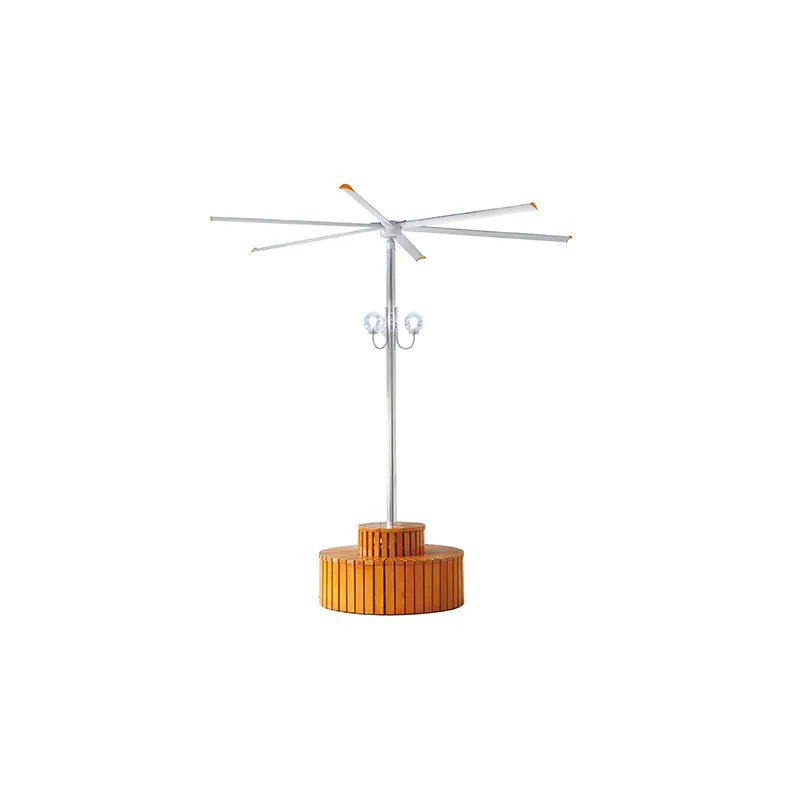
How Industrial Ceiling Fans Deliver Measurable Energy Savings in Warehouses
Warehouse operators today face relentless pressure to cut energy costs without compromising air quality. Industrial ceiling fans—especially HVLS (High-Volume, Low-Speed) models—address both demands by moving vast amounts of air while drawing minimal electrical power, creating a measurable impact on overall facility efficiency.
HVLS Technology and HVAC Load Reduction: Quantifying Up to 30% Energy Savings
HVLS ceiling fans produce a broad, cylindrical column of air that displaces stratified layers within a warehouse, effectively reducing the workload on heating and cooling systems. By continuously mixing air from ceiling to floor, these fans can lower the effective temperature felt by occupants by 5–8°F in summer, allowing thermostats to be raised without losing comfort. This thermal destratification can slash cooling energy consumption by up to 30% (U.S. Department of Energy 2023). In colder months, the same mechanism pushes trapped warm air back to the occupied zone, cutting natural gas or electric heating demand by 15–25%. The reduction in HVAC run-time extends equipment life and lowers peak electrical demand charges—often a substantial portion of a warehouse’s utility bill. When integrated with building automation, savings compound: sensors can trim compressor or burner operation whenever fans are actively destratifying. This synergy makes the 30% figure a realistic, documented benchmark for warehouses pairing HVLS with modern HVAC controls.
Power Consumption vs. Airflow (CFM): Why Efficiency Metrics Matter for Industrial Ceiling Fans
Comparing fans solely on blade diameter or horsepower overlooks the metric that defines true energy performance: cubic feet per minute per watt (CFM/W). A properly designed industrial ceiling fan can circulate over 200,000 CFM while drawing only 1.0–2.0 kW, delivering an airflow efficacy of 0.005–0.010 W/CFM (ASHRAE 2024). In contrast, a bank of conventional high-speed pedestal fans might consume five times the electricity to move the same total volume. This high CFM/W ratio translates directly to lower operating costs for warehouses requiring year-round air movement. Moreover, efficiency must be evaluated at the motor and drive level; premium EC motors with integrated variable-frequency drives maintain high power factors and minimize harmonic distortion, ensuring every kilowatt-hour is converted into useful airflow. When procurement teams compare spec sheets, focusing on CFM/W—not just RPM or motor size—prevents oversized equipment that wastes energy and increases short-cycling wear. In today’s energy-conscious market, the CFM/W ratio is the single most reliable indicator of long-term ventilation economy.
Designing Warehouse Ventilation Around Industrial Ceiling Fans
Matching Fan Specifications to Space Geometry, Climate, and Storage Layout
Selecting the right industrial ceiling fan begins with a careful assessment of the warehouse’s physical characteristics and environmental conditions. A rectangular floor plan with high racking demands different air movement patterns than an open, square facility. In hot climates, the primary goal is often high-volume, downward airflow to create an evaporative cooling effect on workers; in cooler regions, fans may be operated in reverse to destratify warm air trapped near the ceiling, reducing heating costs. Dense storage layouts with tall shelving can obstruct airflow, so fan placement and CFM capacity must be matched to overcome these barriers. Failure to align specifications with space geometry and climate leads to uneven temperatures, discomfort, and wasted energy. By modeling the warehouse’s thermal profile and traffic zones, facility managers can specify industrial ceiling fans that deliver targeted circulation exactly where it’s needed—directly supporting energy performance and ventilation effectiveness from day one.
Optimizing Mounting Height, Blade Diameter, and Speed for Uniform Air Distribution
Once the fan class and configuration are chosen, achieving uniform air distribution hinges on three adjustable parameters. Mounting height should position the fan blades between 10 and 25 feet above the floor—high enough to clear overhead cranes and lighting, yet low enough for the column of air to reach personnel and work areas. Blade diameter dictates coverage area; as a rule, a single fan can effectively serve a radius of 1.5 to 2 times its diameter, so larger-diameter units minimize the number of fixtures needed while maintaining consistent velocity across the floor. Variable-speed drives further refine performance: reducing RPM during cooler parts of the day or in partially occupied zones cuts energy use without sacrificing air quality. Correctly balancing these three factors eliminates stagnant pockets, enhances synergy with HVAC systems, and ensures the entire workspace benefits from the energy-saving potential of high-volume, low-speed technology.
Smart Controls and Automation for Maximum ROI with Industrial Ceiling Fans
VFD Integration, Occupancy Sensing, and Adaptive Scheduling Strategies
VFDs (Variable Frequency Drives) enable precise motor speed regulation, allowing industrial ceiling fans to operate at partial loads and reduce energy consumption by 20–50% (DOE 2022). Pairing VFDs with occupancy sensors automatically reduces airflow when warehouse zones are unoccupied, cutting fan runtime without sacrificing comfort. Adaptive scheduling platforms further optimize cycles by aligning fan operation with shift patterns and real-time temperature data. For example, a leading logistics center integrated smart HVLS controls and reported an 18% drop in HVAC-related electricity consumption within six months. Such automation transforms industrial ceiling fans from passive air circulators into active, data-driven assets, ensuring energy is expended only when and where needed. This integrated strategy typically shortens payback periods to under two years, maximizing ROI.
Real-World Validation: Case Evidence of Energy and Operational Gains
Retrofitting a 120,000 sq. ft. Distribution Center: 22% Lower Operating Costs Confirmed
A 2024 retrofit at a 120,000 sq. ft. distribution hub yielded a confirmed 22% drop in annual operating costs after installing six 24-ft HVLS fans. By destratifying air, the fans let the facility raise cooling setpoints by 4 °F without sacrificing worker comfort, slashing chiller energy use by 18%. Lower peak demand charges and reduced compressor run time contributed another 4% savings. Besides energy, humidity levels stabilized, and air turnover rate improved twofold, eliminating previously reported stale-air complaints. The payback period was under two years, with $34,000 saved in the first fiscal year (2024 facility audit). This case underscores how properly specified industrial ceiling fans turn ventilation into a profit-center, not just a compliance checkbox.
FAQ Section
What does HVLS stand for?
HVLS stands for High-Volume, Low-Speed, referring to industrial fans designed to move large amounts of air efficiently and with minimal power consumption.
How do HVLS fans save energy in warehouses?
HVLS fans improve air circulation and destratify layers, helping HVAC systems work efficiently. By reducing heating and cooling demands, they can cut energy costs by up to 30%.
Why is CFM/W an important metric for industrial ceiling fans?
CFM/W measures the amount of airflow a fan produces relative to its power usage. Higher CFM/W ratios mean better energy efficiency and lower operational costs.
How does fan placement influence performance in warehouses?
Proper fan placement considers space geometry, climate, and storage layout to ensure even air distribution, reducing energy waste and maintaining comfort.
Can industrial ceiling fans integrate with smart controls?
Yes, industrial ceiling fans can pair with VFDs, occupancy sensors, and adaptive scheduling platforms to optimize energy use and return on investment.
 ONLINE